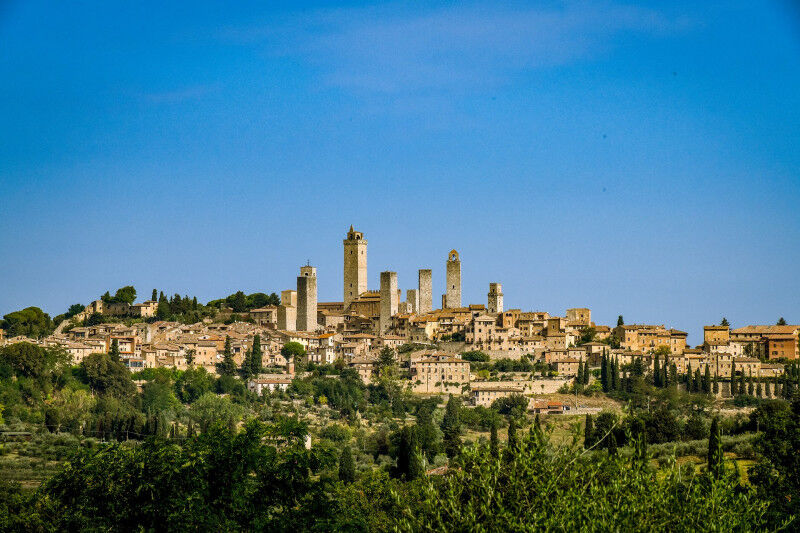
Once, there were 72 towers; now, only 14 remain. These iconic medieval skyscrapers are instantly recognizable as the hallmark of San Gimignano, their silhouettes rising dramatically above the Tuscan countryside.
Why were these towers built, and what caused so many to disappear? Like many fortified towns in Tuscany, San Gimignano originated as a site for Etruscan and Roman military settlements. By the 9th century, the area had blossomed with agriculture, wine production, and the wool trade. To protect their prosperity, residents constructed a fortified wall with two gates—some traces of which still survive in the city’s winding streets.
The first known record of the town dates back to 929 AD, referencing the Castellum Sancti Geminiani, or fortress of Saint Geminianus. After 1100, the local aristocracy began to build their homes vertically, not just because of limited space, but also as a show of wealth and as additional defense. In times of unrest, a tower-house was a fortress within a fortress.
The taller the tower, the greater the demonstration of wealth and political power. Imagine the effort: stone blocks hauled from distant quarries, primitive tools, and wooden scaffolds—all assembled with ingenuity and muscle. These towers truly represent the ambition and skill of the medieval builders.
Between 1100 and 1300, San Gimignano flourished during the Golden Age of the Italian City-States. Under the rule of the Bishops of Volterra, the city became a crucial stronghold in the intense rivalries with Florence, Siena, and Pisa. Despite wars and hardship, San Gimignano thrived, prompting the construction of even more fortified walls—sections of which remain impressively intact, especially around Porta San Giovanni.
By the 14th century, the city had gained full independence and emerged as a regional power. On May 8, 1300, Dante Alighieri, the famed author of the Divine Comedy, visited as a Florentine envoy. Although he failed to convince the city to align with Florence, his presence left its mark on San Gimignano’s storied past.
For two and a half centuries, San Gimignano prospered independently. The towers multiplied, and patrons of the arts commissioned remarkable works, rivaling even Florence, the cradle of the Renaissance. Visit the Collegiata di Santa Maria Assunta to see the exquisite Annunciation wood sculptures by Jacopo della Quercia and Martino di Bartolomeo, masterpieces that capture the city’s creative spirit.
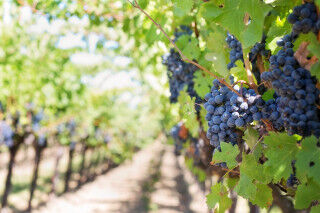
San Gimignano is also renowned for its signature white wine, Vernaccia di San Gimignano. Cultivated since the 13th century and achieving economic importance by 1450, Vernaccia is one of Tuscany’s most celebrated wines—crisp, aromatic, and perfect with local delicacies like pappardelle al cinghiale or pecorino.
In 1555, the history of San Gimignano changed course when Florence, under Duke Cosimo I de’ Medici, conquered the Republic of Siena and San Gimignano. To humble the city, around fifty towers were demolished and new construction was forbidden, preserving the town’s medieval character and leaving no trace of Renaissance, Baroque, or Neoclassical styles. For centuries, the city languished in obscurity.
San Gimignano’s revival began after World War II, as tourism restored life to its ancient streets. Today it is a UNESCO World Heritage Site, famed for its authentic charm, artisan shops, award-winning gelato, and regional treasures like saffron, olive oil, and hand-painted ceramics.
Don’t miss a tasting of Vernaccia di San Gimignano DOCG during your visit. Wander the lively Piazza della Cisterna, soak in breathtaking views, and discover the true flavors and history of Tuscany. Sign up for the Mamablip Newsletter to get exclusive recipes, wine tips, and more inspiration from the heart of San Gimignano!
San Gimignano: The Towering Symbol of Tuscany
A True Tuscan Gem You Simply Can't Miss. What makes the legendary, tower-adorned town of San Gimignano so fascinating and alluring for travelers? Discover why San Gimignano has long been a top choice for those eager to experience the authentic heart of Tuscany.
By Nina BernheimAug 10, 2020