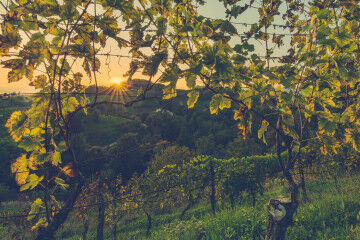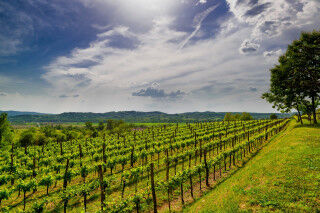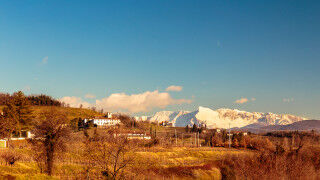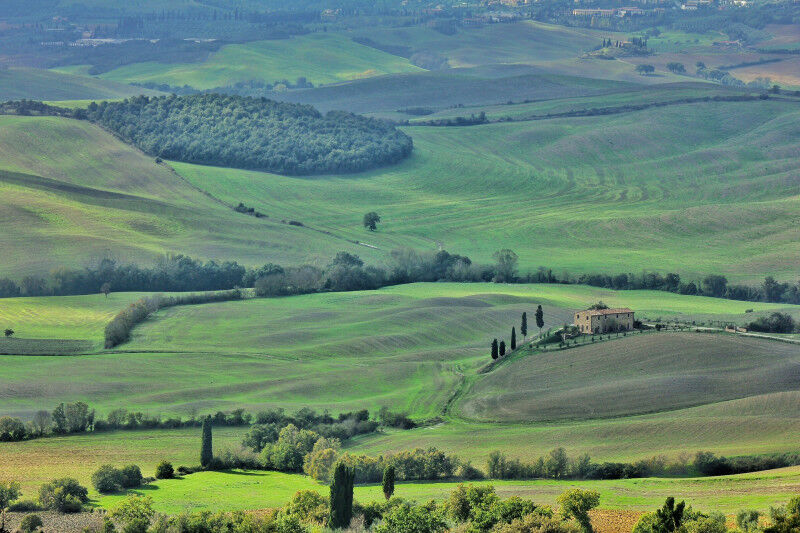
'...two names that conjure up images of dreamy, stone-walled villages perched atop sun-drenched hills, where the golden Mediterranean light caresses fields of Sangiovese vineyards and shimmers on silvery olive groves. Picture wide canopies of umbrella pines casting shade over ancient Roman roads, and elegant rows of cypress trees stretching along the skyline. Both regions boast grand palazzi and cathedrals that seem to sing in stone, holding within them incredible treasures of art, sculpture, and architecture. Dive into a world where food is not only healthy and flavorful, but also heartwarming and unforgettable—from a rustic ribollita or rich panzanella in Tuscany, to the earthy truffle pastas and legendary porchetta of Umbria. These lands are woven with the history of the Etruscans, the glory of Rome, the romance of the Middle Ages and the brilliance of the Renaissance.'
Volumes could be written about the allure of Umbria and Tuscany, whose timeless beauty has inspired travelers, artists, and writers for centuries. Instead of retelling what you may already know, let's uncover some irresistible highlights and mouthwatering secrets that will make your journey through these regions unforgettable.
Essential Facts at a Glance:
Tuscany (Regione Toscana) closely follows the historic boundaries of the Grand Duchy of Tuscany before becoming part of unified Italy in 1860. This magnificent region spans 22,900 km²—encompassing rolling hills, coastal gems, and vibrant cities—home to about 3.5 million people. Tuscany is a patchwork of dramatic landscapes where every corner offers a new perspective: from the golden hills of Val d'Orcia, famous for its Brunello di Montalcino wines, to the sun-dappled slopes of Chianti dotted with ancient castles and wineries.
Umbria, once a province of the Papal States before joining Italy in 1871, is often called "Italy's green heart". With an area of 8,450 km² and a population of around 800,000, Umbria's gentle mountains, dense forests, and shimmering lakes (like Lake Trasimeno) set the stage for a slower, more intimate travel experience. It’s a region rich in tradition, where local festivals and food fairs celebrate everything from black truffles to Norcia sausages.
Must-Visit Cities and Towns:
In Tuscany, the legendary cities of Florence (Firenze), Lucca, Siena, and Arezzo beckon with their world-class museums, Renaissance masterpieces, and vibrant street life. Florence dazzles with icons like the Duomo and Uffizi Gallery, while Siena enchants with its medieval squares and the thrilling Palio horse race. Lucca invites you to cycle atop its Renaissance walls, and Arezzo offers bustling markets and frescoed churches. Umbria is equally captivating, with Perugia—famous for its Eurochocolate Festival and Baci chocolates—the spiritual city of Assisi, stunning Spoleto with its Roman amphitheater and Festival dei Due Mondi, and the dramatic hilltop city of Orvieto, home to the spectacular Duomo di Orvieto and caves beneath the city.
All historical centers in these cities are largely pedestrianized, making them ideal for leisurely strolls. As you wander, look beyond the shop windows and marvel at the mosaic of architectural wonders that narrate centuries of history. Venture down winding alleys and you'll discover cozy trattorie where you can savor pappardelle al cinghiale (wild boar pasta) in Tuscany or torta al testo (Umbrian flatbread) in Umbria, always paired with an excellent glass of local Vino Nobile di Montepulciano or Sagrantino di Montefalco.
Lucca is a Tuscan treasure—peaceful, impeccably kept, and full of charm. Whether you explore its cobbled streets by foot or bicycle, you'll encounter lively piazzas, artisan shops, and the inviting aroma of freshly baked buccellato (sweet bread). A guided tour here reveals fascinating hidden gardens, Roman ruins, and local legends. By contrast, Arezzo is larger and more energetic, with a lively antiques market and dramatic hills that offer stunning views for those willing to wander off the beaten path.
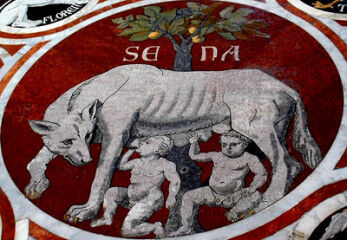
Siena stands as a jewel of medieval Italy. Two days here is barely enough to enjoy its harmonious streets, the shell-shaped Piazza del Campo, and the culinary joy of panforte (spiced fruit and nut cake) or pici all'aglione (thick pasta with garlic-tomato sauce). The city’s soul is unmistakably Tuscan—warm, welcoming, and passionate about its wines and precious extra virgin olive oils.
In Umbria, Perugia will enchant you with its vibrant university atmosphere, ancient Etruscan walls, and a lively food scene—from truffle-laced tagliatelle to decadent chocolate treats. Assisi is dominated by the awe-inspiring Basilica of Saint Francis, yet beyond its spiritual aura, you’ll find flower-filled lanes and serene countryside vistas. Spoleto charms with its medieval bridges and Romanesque churches, and Orvieto’s cathedral facade is a mosaic of gold and color that glows at sunset.
The soul of Umbria is unique: its dialect, architecture, and cucina all reflect a distinctive, generous spirit. The food here is more elaborate than in Tuscany, echoing influences from nearby Rome. Savor local delights like lenticchie di Castelluccio (tiny lentils), porchetta (herb-roasted pork), and sweet torcolo cake—specialties rarely found elsewhere.
As you explore the intimate villages scattered across both regions, you'll encounter ancient towns frozen in time, their medieval character preserved in stone and tradition. They are robust and authentic, sometimes severe, but always revealing unexpected moments of beauty—a colorful festival, a passionate local story, or a sudden view of rolling hills that takes your breath away.
Tuscany is dominated by Romanesque and Renaissance architecture, sprinkled with Gothic flair. You’ll find little trace of Baroque excess, leaving the region with a harmonious, timeless look. Umbria shares these influences, though on a more intimate scale. While Tuscan art is world-renowned, Umbrian artisans excel in delicate majolica ceramics, intricate lacework, and mouthwatering cured meats.
Thanks to its extraordinary climate, visiting Tuscany or Umbria is a feast for the senses—rolling hills, sunlit valleys, and vibrant flora combine in an endlessly changing panorama. These regions are a testament to the perfect balance between human artistry and natural abundance. As poet Torquato Tasso once mused, Tuscany might well be a slice of earthly paradise. But to truly experience it, trade the highways for scenic backroads—let the windows down, breathe in the countryside, and embark on a walk that will reveal a new world at every turn.
Specialized walking maps abound, tailored for interests ranging from agritourism and artisanal crafts to historic architecture and vineyard trails. Whatever your passion, we’re here to help you savor every step of your Italian odyssey!