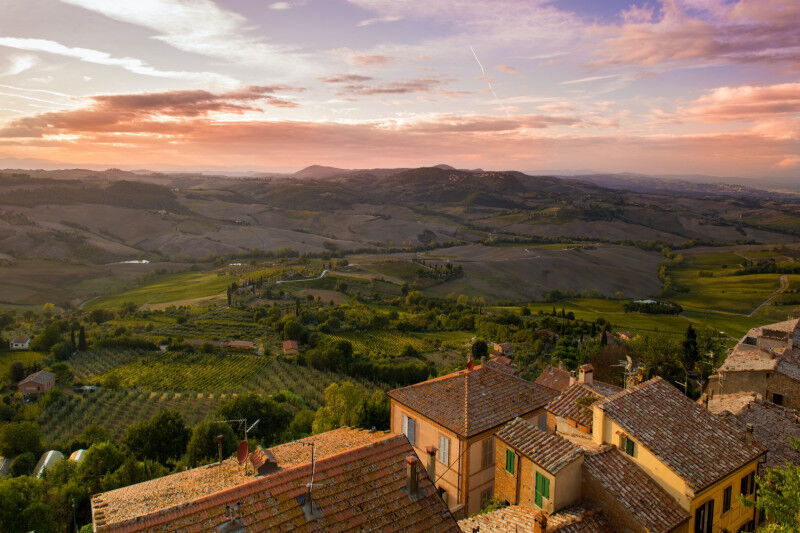
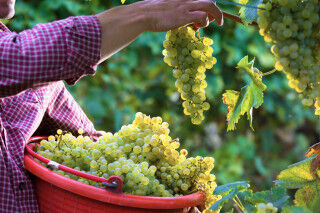
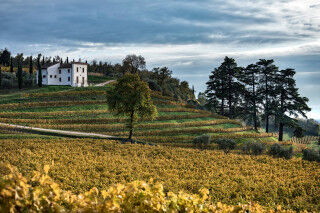
This most picturesque of the Tuscan wine regions has not always enjoyed a smooth history, with locals praising their wines while foreign connoisseurs often underestimated their value. Fortunately, today’s Vino Nobile di Montepulciano enjoys a robust reputation, and contemporary wineries prove that local wine lovers have long been correct in their appreciation.
Local Medieval records document the production of exceptional wines in the vineyards of Mons Politianus. During the Renaissance, Sante Lancerio, cellarman to Pope Paul III Farnese, praised these local wines as being perfect in all seasons. He described them as aromatic, fleshy, and balanced, fit for noblemen—reflected even in the earliest labels, which read simply Rosso Scelto di Montepulciano.
In the late 17th century, Francesco Redi, a renowned doctor, naturalist, and poet, celebrated the wine in his ode "Bacchus in Tuscany". The poem ends with Bacchus declaring Montepulciano the king of all wines. This poetic endorsement became famous and traveled through European royal courts, even reaching William III of England, Scotland, and Ireland. King William’s fondness for Tuscan wines was likely influenced by Redi’s writing, as shown by an English delegation's journey to the Grand Duchy of Tuscany to procure both Moscadello di Montalcino and Vino Nobile di Montepulciano for the king and his court.
The wine continued to be appreciated until the 19th century, when it faced harsh criticism at the Vienna Exhibition of 1873. The British royal winemaker commented that the lone Montepulciano sample was so mediocre it cast doubt on Redi's legendary praise.
Montepulciano’s history is deeply intertwined with the prestige of its vineyards and wines. According to legend, the town was founded by the Etruscan king Lars Porsenna, who left Chiusi for the hill of Mons Mercurius with his followers, later changing the name to Mont Politicus. The essential role of wine in Montepulciano’s story is highlighted by the discovery of an ancient kylix (wine cup) in a nearby Etruscan tomb.
The kylix, crafted in Chiusi, features red-figure artwork of Flufuns (the Etruscan Bacchus, god of wine) playing cottabo (a wine game) with a maenad. Other bronze objects found in the tomb underscore the historical significance of wine in Montepulciano's development.
In his "Histories," Livy recounts how the Gauls were lured into Italy by the wines from these hills. According to Livy, Arrunte, an Etruscan from Chiusi, let the Gauls taste the wine to entice them across the Alps, allowing him to avenge his Locumone over a matter of jealousy.
Historical documents provide more insight: a record from 789 shows that the cleric Arnipert donated land with vineyards inside the castle of Policiano to the church of San Silvestro or San Salvatore on Mt. Amiata.
Later, in his "Historical and Geographical Dictionary of Tuscany," Repetti mentions a document from around 1350 establishing the terms for the trade and export of Montepulciano wine.
In the early 20th century, Vino Nobile di Montepulciano seemed to lose favor. This changed in 1933, when the first Siena wine market showcased local wines, organized by the National Market-Exhibition Body. Cantina Fanetti, still active today, presented a refined red wine that received widespread acclaim.
Other wineries soon followed, and in 1937 a cooperative was formed to help smaller producers sell their wines. While most production was Chianti, some Nobile was included. Today, this cooperative produces the largest quantity of bottled Nobile DOC and DOCG wines.
The 1960s marked a renewal in winemaking, with a focus on Vino Nobile production. State and EEC support enabled wineries to meet DOC standards, leading to the emergence of new producers. The DOCG designation arrived in 1980, ushering in a new era for Vino Nobile. The DOC status for Rosso di Montepulciano maintained a distinction between the two wines in terms of yield per hectare, alcohol content, and aging, even though they share the same production area.
Producers can now choose which DOC regulations best suit their land’s characteristics, climate, and the unique qualities of their grapes, allowing them to pursue excellence in every bottle.
If you’re eager to discover more about Tuscan wines, explore the renowned Bolgheri wine region here. Both Bolgheri and Montepulciano offer exceptional wines—be sure to visit the Bolgheri Consortium page for full details, and stay tuned to Mamablip for more news from the world of Chianti and Tuscan wines.
Stay updated by signing up for the Mamablip Newsletter below. Keep up with all the secrets from Mamablip’s kitchen and wineries you won’t want to miss!
Vino Nobile di Montepulciano
Montepulciano's Journey to Modern Acclaim. Vino Nobile di Montepulciano began with humble roots but has blossomed into a beloved classic. Explore the fascinating story of how Montepulciano's signature wine won the hearts of enthusiasts worldwide.
By Elaina BorerAug 10, 2020