To truly appreciate the captivating world of Valle d’Aosta wines, let’s begin our journey with the visionary Swiss geologist Horace-Benedict de Saussure. In the late 18th century, Saussure not only explored the Alps, he reimagined them. By blending scientific curiosity with immersive field experience, he pioneered an approach where trekking through the mountains became a vital key to understanding their secrets. This unique perspective inspired a lasting question: Could the wines crafted in the heights of Valle d’Aosta truly be better? Surrounded by the serene might of the Alps, it’s easy to feel a meditative calm, sharpening the senses and preparing the palate for discovery. Welcome to Valle d’Aosta, Italy’s smallest region, passionately marked by the colors "rouge et noir"—not just a symbol of its flag, but of its vibrant spirit and enduring fortune.
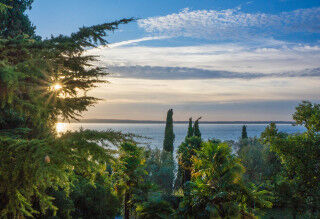
Once, Valle d’Aosta was the playground of Europe’s elite, thanks to the famed Saint-Vincent Casino. In its heyday, royalty, Hollywood stars, and business moguls flocked to its roulette tables, drawn by the magnetic beauty of the landscape and the pulse of economic success. Today, the region’s allure is more natural but no less intoxicating: pristine valleys that dazzle in the golden light of sunset, and awaken as vibrant tapestries of wildflowers at dawn. Here, visitors become privileged witnesses to daily alpine transformations—a landscape that demands you slow down and savor every moment, much like a fine glass of local wine.
Journey deeper and you’ll discover an abundance of treasures: from the enchanting Sant'Orso in Cogne and the charming municipality of Emarèse to the lush Champorcher Valley, and the picturesque Barmasc, Chamois, and Conca di By. Each alpine village is a storybook scene of rustic stone houses, quaint medieval churches, and ancient irrigation canals called "ru"—vital arteries that channel pure mountain water to vineyards and farms. The region’s extraordinary hydrogeological richness not only nurtures a flourishing network of renowned spas but also lays the foundation for its unique wines. The roots of Valle d’Aosta’s winemaking reach deep into history, beginning with the ancient Salassi tribe and flourishing under Roman influence.
By the 2nd century B.C., the Romans recognized the valley’s potential, making grapevines central to its identity. That legacy was safeguarded through centuries, culminating in an edict by the Bishop of Ivrea in 1272 to meticulously protect local vineyards. The renaissance of Valle d’Aosta’s wine began in the 1960s, thanks to the vision of leaders like Canon J. Vaudan and the establishment of the pioneering Institut Agricole Régional. Here, experimental plots—planted in the region’s rugged soils—laid the groundwork for today’s thriving wine culture.
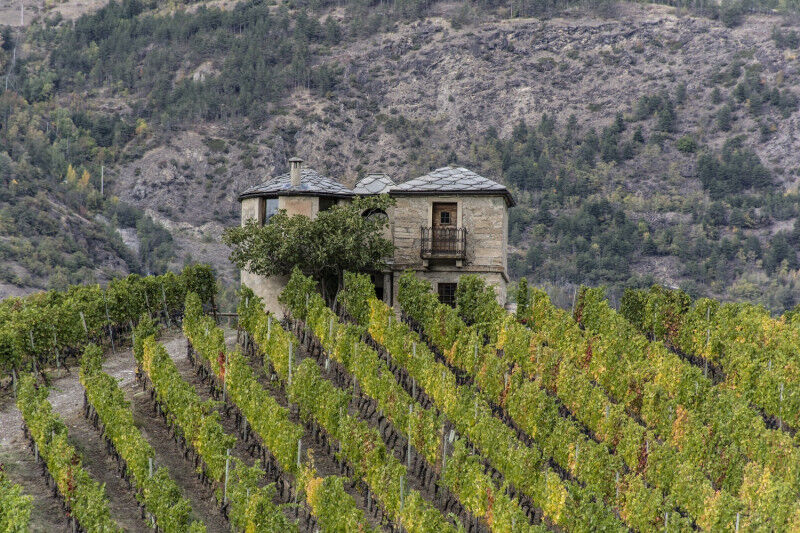
The very act of cultivating grapes in Valle d’Aosta is heroic. Imagine rows of vines clinging to steep, rocky slopes, their roots burrowing into morainic-sandy soils rich in minerals, shaped by ancient glaciers. Local winegrowers honor the philosophy of "zero kilometer," using authentic materials like stone, chestnut wood, and willow to craft their vineyards. These hands-on traditions allow the valley’s wine landscape—set against the dramatic backdrop of the Graian Alps—to serve as a living testament to the intimate connection between people and place.
Mountain viticulture here is not just demanding—it’s extraordinary. The steep gradients, the constant battle with erosion, and the sheer manual labor required make every bottle an act of devotion. Yet this adversity brings rewards: the region escaped the devastation of the phylloxera blight, preserving precious native grape varieties that are now the pride of the valley. Winemakers here treat their vines like treasured family gardens, coaxing exceptional quality from every cluster.
The wines themselves are a revelation. For whites, savor the crisp, aromatic Prié Blanc, the elegant Petite Arvine, the expressive Pinot Gris (locally known as Malvoisie), and the vibrant Chardonnay. Each sings with mountain freshness, juicy minerality, and refined elegance. The reds are equally impressive: robust, spicy Fumin; the complex, perfumed Cornalin of the High Valley; and the regal Nebbiolo—or Picotendro—cultivated in the Lower Valley. These grapes, bursting with character, have moved beyond rustic traditions into wines that are structured, lively, and layered with spice and alpine herbs.
Ultimately, Valle d’Aosta is a treasure trove of flavors, history, and scenery—a place where culinary artistry and nature’s vitality go hand in hand. Here, the mastery of aging and preservation transforms mountain grapes into wines of remarkable finesse and distinction. The region’s allure remains as irresistible as ever: raise a glass, breathe in the alpine air, and let your senses be awakened by the enchanting spirit of Valle d’Aosta.
Top Alpine Excellence: Valle d’Aosta’s Distinctive Wines
Discover how the passionate wine-makers of Valle d’Aosta infuse their wines with the bold character of the Alps, leading the way in innovative mountain viticulture.
By Lele GobbiDec 01, 2020