CAPEZZANA AND AGRICULTURE: A TIMELESS BOND
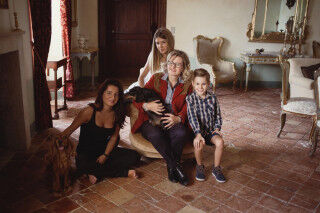
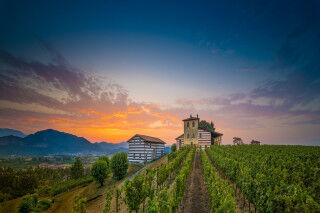
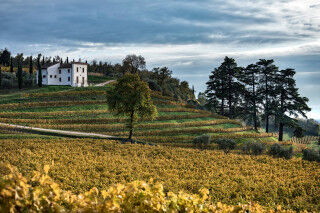
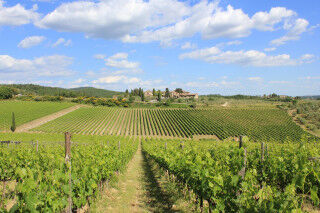
Step into the world of Tuscan wine and you’ll find yourself surrounded by captivating stories and legendary estates that have sculpted this land’s legacy for over a millennium. Here, every vineyard tells a story, every bottle echoes the passion and ingenuity of generations of wine-makers who have elevated Tuscan wine to international acclaim. Among these icons, the Contini Bonacossi family stands tall as the guardians of Capezzana—a sprawling estate in the heart of Carmignano that has been perfecting the art of organic farming for over 1,200 years.
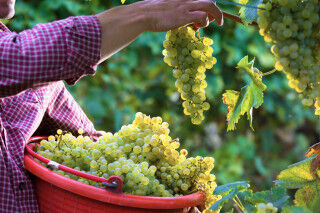
Imagine ancient hands tending to the same fertile soil, coaxing grapes and olives from the earth with a deep respect for nature’s rhythms. Capezzana is a living testament to sustainable agriculture, where natural elements are cherished, and organic principles are not a recent trend but a heritage. The estate’s vineyards and olive groves thrive in a unique microclimate, where the gentle embrace of Mediterranean breezes and the stable conditions of Tuscany’s central hills create the perfect balance—a harmony captured in the Latin phrase in medio stat virtus, meaning “virtue lies in the middle.” This equilibrium gifts Capezzana’s wines and extra virgin olive oils with an unmistakable purity and depth of flavor.
CARMIGNANO: A LAND RICH IN HISTORY AND FLAVOR
The roots of Carmignano dig deep into the soil of history, reaching back nearly three thousand years. This charming village near Prato has witnessed the birth and evolution of winemaking since the time of the Etruscans, as evidenced by the discovery of ancient wine amphorae in local tombs. The land’s prestige grew further during the era of the Roman Empire, when the legendary Julius Caesar awarded fertile plots—already lush with grapevines and olive trees—to his esteemed veterans.
The earliest surviving document attesting to the agricultural prowess of Capezzana dates back to 804 AD. This ancient Latin lease from the Church of San Pietro a Seano describes a holding “with vineyards, woods, and olive groves,” underscoring the enduring vitality of the region’s terroir. Capezzana’s wines began their journey to international recognition in the 17th century, embarking on trade routes to Northern Europe.
A watershed moment arrived in 1716 when the ruling Medici family issued an official proclamation that defined the boundaries of the Capezzana wine region, forever linking it with other legendary appellations like Chianti, Pomino, and Valdarno di Sopra. This historic act predated the French Appellation d’Origine Contrôlée by more than 150 years, placing Carmignano at the forefront of the global wine scene.
The 18th and 19th centuries saw Capezzana blossom as a hub of experimentation, with the Medici at the helm. Local producers developed wines of remarkable authenticity, body, and elegance—a legacy that continues to inspire. Yet the road was not always smooth. For decades, Carmignano’s unique voice was subsumed under the broader Chianti and Montalbano denominations, almost disappearing into the background until the visionary Ugo Contini Bonacossi led a renaissance in the late 1960s. Thanks to his tireless advocacy, Carmignano reclaimed its DOC in 1975 and received prestigious DOCG status in 1998.
What sets Carmignano apart is its tradition of blending international varieties—Cabernet Franc and Cabernet Sauvignon—with the noble Sangiovese, centuries before the birth of the famed Super Tuscan movement. This innovative spirit has given rise to wines that are bold, age-worthy, and deeply expressive of their origins.
VILLA DI CAPEZZANA: WHERE HISTORY, ART, AND WINE INTERTWINE
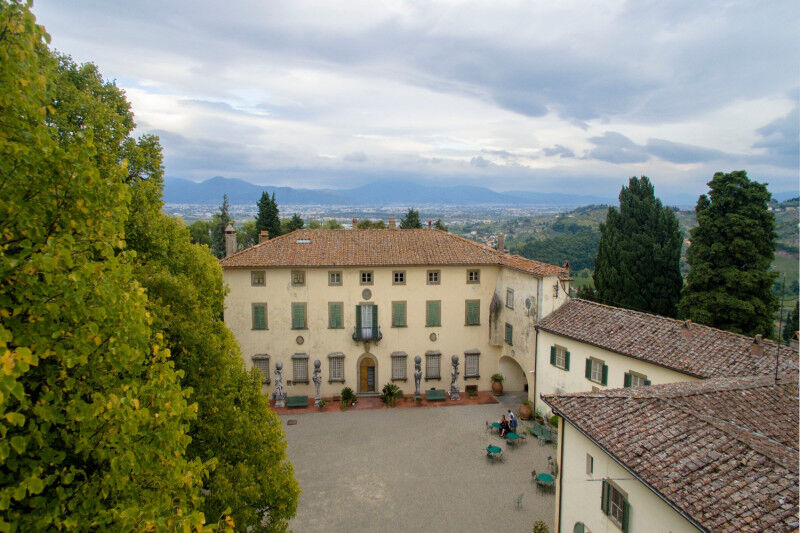
A visit to the Villa di Capezzana is a feast for all the senses. Here, you can savor guided tastings of Capezzana’s acclaimed wines—like the elegant Carmignano DOCG and the luscious Vin Santo di Carmignano—while immersed in the estate’s centuries-old ambiance.
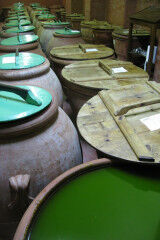
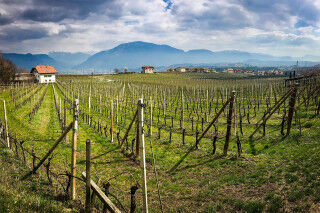
The estate sprawls across 100 hectares of vineyards, 140 hectares of olive groves, and 350 hectares of forest, encompassing a remarkable array of experiences. Discover the atmospheric 16th-century wine cellar, where oak barrels cradle aged Carmignano; witness the modern olive oil mill pressing plump olives into liquid gold; and step into the enchanting "vinsantaia" where sweet Vin Santo matures in casks under the Tuscan sun.
The villa itself is a treasure trove, from the refined "Salottino Impero" to the evocative "Stanza di Elena" and the grand "Sala Grande". Each room dazzles with priceless paintings, antiques, and decorative art—a living museum that whispers of centuries past. Step outside and the estate’s manicured gardens and rolling hills invite you to breathe in the scents of vineyards, woodlands, and wildflowers.
Touring the Villa di Capezzana offers insight into Renaissance architecture and the Tuscan villa lifestyle, but above all, it is a celebration of organic and biodynamic viticulture. The estate leads the region in eco-friendly winemaking, crafting wines that express both the richness of the land and the elegance of tradition.
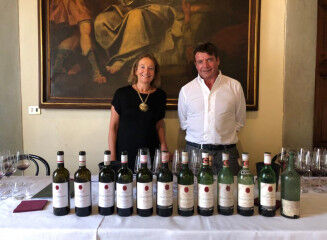
A highlight for enthusiasts is the vertical tasting—a journey through decades of Villa di Capezzana vintages, from 1930 to 2017. Each glass reveals the estate’s remarkable consistency and the unique character of every year. The legendary 1969 vintage, hailed as “touched by the divine,” stands out for its complexity and harmony, offering a sensory trip through time. Recent vintages like 2010, 2016, and 2017 exhibit structure, lush fruit, and floral notes of violets, while older bottles from 1930, 1969, 1974, 1977, 1981, and 1995 enchant with herbal nuances and silky tannins.
Curious about pairing Capezzana wines? Explore the Wine Selections page for expert food and wine pairing tips, and discover how Capezzana complements classic Tuscan dishes like Pappardelle al Cinghiale or Bistecca alla Fiorentina.
Don’t miss out! Subscribe to Mamablip’s newsletter for the latest stories, authentic Tuscan recipes, and expert wine tips straight from Italy’s heartland.