MONTALCINO AND ITS CITY-BASED BEAUTIES
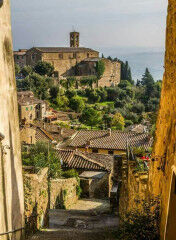
Montalcino has always been somewhat isolated from main communication routes, which has only strengthened its proud, independent spirit and preserved its richly storied past. Rising atop a hill at 564 meters above sea level, Montalcino experienced its greatest architectural and cultural development around a medieval core, although its roots go back to Etruscan and Roman times.
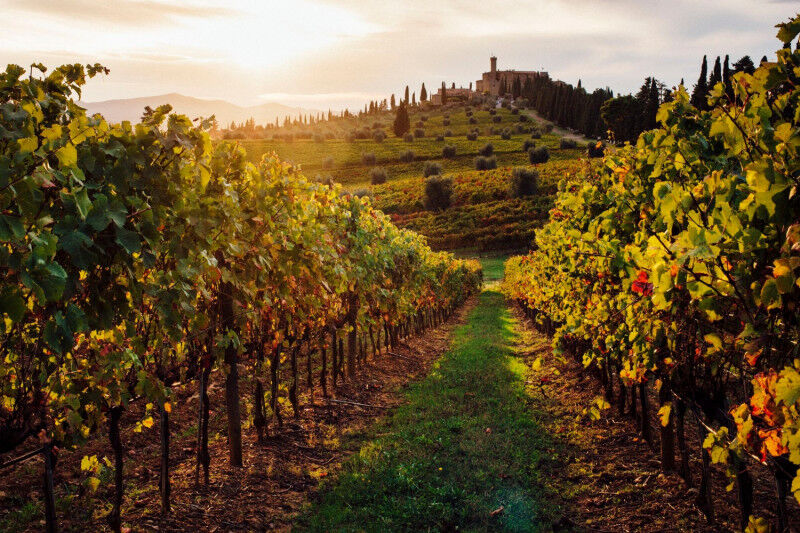
The crown jewel of the town is the imposing Fortezza, constructed in 1362 by the Sienese. For four pivotal years, it served as the final stronghold of the Sienese Republic after Siena fell to the Florentines in 1555. Today, the Fortress stands as a lasting symbol of resilience and the challenging history that shaped Montalcino, its stone walls enclosing the heart of the town.
Eighteenth-century historian Giovanni Antonio Pecci wrote, "Thirteen towers of fortification can be seen around the walls. And at the highest place, a grand fortress with a hexagonal donjon, four bastions, embanked walls, a chapel, and dwellings, where the commander and soldiers once lived." His words evoke the enduring strength and strategic importance of this medieval monument.
The soul of Montalcino’s viticulture is the Sangiovese grape, which forms the foundation for the region’s iconic wines. Delve into its fascinating profile here: Sangiovese Grapes: Tuscan Saint or Devil?
Demolition and restoration in the 1940s have allowed today’s visitors to explore the Fortezza and grasp the complex defensive planning that protected its residents throughout the Middle Ages and the Renaissance.
Alongside civil architecture, the town’s spiritual heritage is equally impressive. Visit the Duomo, Church of Madonna del Soccorso, and Church of Sant’Agostino. Over time, renovations have altered their original spiritual and artistic atmospheres, yet their significance remains. To truly appreciate Montalcino’s artistic past, don't miss the Civic and Diocesan Museum of Sacred Art in the Convent of St. Augustine, which houses an exceptional collection of masterpieces, thoughtfully arranged to maximize your experience.
OUTSIDE OF MONTALCINO
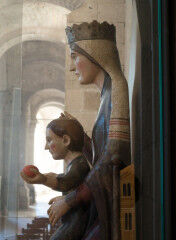
Take the scenic route to discover the Abbey of Sant’Antimo, a breathtaking example of medieval architecture and spirituality. Nestled among olive and holm oak trees just before Castelnuovo dell’Abate (about 10 km from Montalcino), this abbey is a hidden gem in any itinerary exploring the region. Legend has it that Charlemagne founded the abbey in 781 to honor Saints Antimo and Sebastian for saving his army from plague while in Val d’Orcia.
Interested in how Montalcino’s wines are promoted across Italy? The Consortium of Brunello di Montalcino Wines plays a key role—learn more about their influence and dedication.
The Abbey of Sant’Antimo reached its peak between the 11th and 12th centuries and remains an enchanting monument today. Its greatest legacy is perhaps having granted local power to nearby Castelnuovo d’Abate in the 13th century.
Don’t miss San Quirico d’Orcia, a charming village just 15 minutes from Montalcino. Once the seat of an imperial vicar and later part of Siena, it's renowned for its exceptional craftsmanship and building skills. Explore the Orti Leonini—16th-century gardens within the ancient bastions—the splendid Collegiata with its Romanesque portal resting on sculpted lionesses, the quaint Church of Santa Maria Assunta, and the Antico Spedale with its beautiful Renaissance well from 1543.
Cycling through these hills is a dream—no wonder the Giro d’Italia often passes through. Experience this year’s connection between the iconic race and the region’s wines here: Giro d’Italia and Consorzio del Vino Brunello di Montalcino - a Divine Duo.
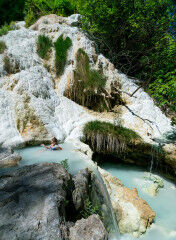
As you descend toward Mount Amiata, be sure to stop in Bagno Vignoni. This unique village boasts natural thermal waters full of calcareous iodine, magnesium, and iron—pleasantly low in sulfur—enjoyed since Roman times. The town’s centerpiece is a stunning ancient pool, a historical marvel to admire.
Finally, just over 20 km from Montalcino, lies Pienza, often called one of the world’s most picturesque balconies. This gem of Renaissance town planning dazzles visitors with its Duomo, Palazzo Comunale, Palazzo Piccolomini, Church of San Francesco, ancient Romitorio, and Pieve di San Vito. From here, gaze out over the breathtaking Val d’Orcia landscape stretching below.
THE SLOPES OF BRUNELLO DI MONTALCINO
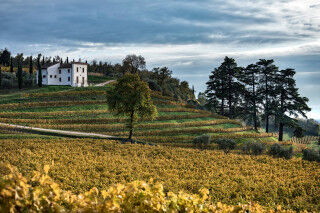
How about Montalcino’s wines? Mapping the area’s wines by geography is no simple task, as the personalities of Brunello di Montalcino vary greatly depending on where the grapes are grown. Here’s a glimpse into the region’s four distinct terroirs:
- North: Northern winds cool the air, and fertile, loose soils give Sangiovese grapes aromatic complexity and a robust body.
- West: Sea breezes and the mistral wind impart a salty character to grapes and musts. The stony, coarse soils give the wines a mineral-driven flavor profile.
- South: Sheltered from the wind, these vineyards experience higher average temperatures, with grapes ripening earlier and soils rich in skeleton and limestone, resulting in powerful, structured wines.
- East: Facing Mt. Amiata, vineyards here can reach considerable altitudes. Winds and sandy gullies shape strong, rounded wines with notable character.
THE WINERIES - WHERE TO ENJOY AN UNFORGETTABLE EXPERIENCE
Begin your wine adventure in the southeast at Podere Le Ripi, an oasis where winemakers and visitors connect directly with nature. Here, the goal is not only to make wine but also to preserve the integrity of the land. The soul of the winery’s founder Francesco Illy and his partner Sebastian Nasello shine through in every bottle, blending intelligent planning, tradition, and respect for the terroir. Discover the people behind the magic here: Podere Le Ripi's Inspiration Lies Within its Wine-Makers.
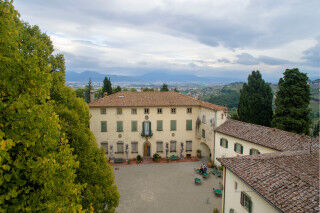
Continue south to the ancient Argiano winery, dating to 1580, where you can taste exceptional wines in a storybook 16th-century villa.
In the west, visit Tenuta le Potazzine and experience the family’s agricultural tradition and distinctive, high-quality wines.
To the east, La Fornace is a small winery with 7 hectares of vines and olive groves, where the Giannetti family produces authentic Brunello reflecting simplicity and genuine character.
To the north, Franco Pacenti in the Canalicchio basin is considered one of the most expressive wine regions within the denomination.
Looking for more ideas? Explore Giro d’Italia and Consorzio del Vino Brunello di Montalcino - a Divine Duo.
WHERE TO EAT
La Drogheria
Savor expertly reimagined Tuscan classics and innovative dishes, accompanied by a wide variety of wines—especially Brunello di Montalcino.
Piazzale Fortezza, 6 - 53024 Montalcino (SI) / Tel. 0577 848191
Le Logge
Dine beneath stunning high arches in this formerly ancient marketplace. Enjoy a relaxed atmosphere and delicious local dishes, thoughtfully prepared with regional wines.
Via Giacomo Matteotti, 1 - 53024 Montalcino (SI) / Tel. 0577 846186
Boccon di Vino
This rustic, family-run restaurant boasts creative cuisine and a terrace overlooking vineyards and olive groves. Meet the Giannetti family and discover their simple, authentic approach to Tuscan dining. Don’t miss a visit to Franco Pacenti in the Canalicchio area, a classic and acclaimed part of the region.
Locality Colombaio Tozzi, 201 - 53024 Montalcino (SI) / Tel. 0577 848233
WHERE TO SLEEP
Hotel Il Giglio
This charming, family-run hotel is set in a 17th-century palace, featuring beautiful exposed stone walls, elegant dark wood furnishings, and bright, welcoming decor.
Via Soccorso Saloni, 5 - 53024 Montalcino (SI) / Tel. 0577 848167
Don’t miss the Mamablip video series "Miracle of Montalcino"—explore wine, history, culture, and more!
Stay updated on all the latest with Mamablip’s weekly newsletter—featuring new blog articles, recipes, and Italian wine news.