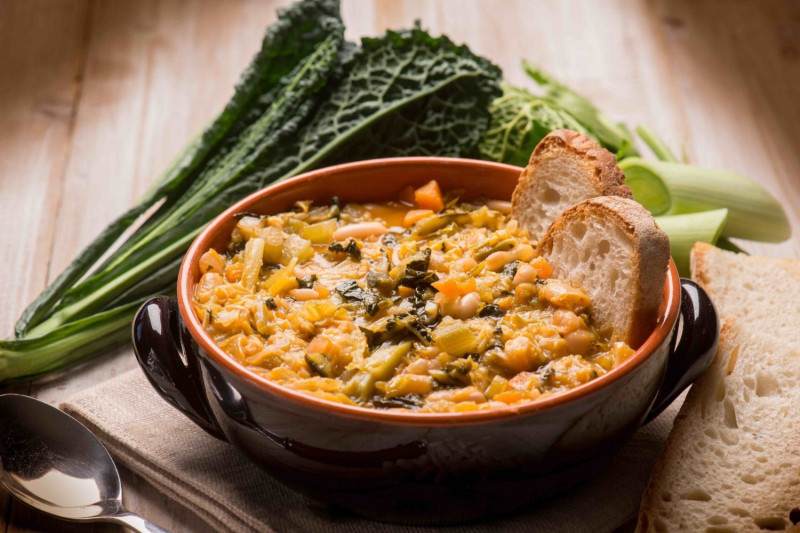

Tuscan Ribollita – Hearty Bread and Vegetable Soup
Transform leftover bread into a classic, comforting Tuscan staple.
- ( Scored 5 on 1 reviews )
Nina:
The best way EVER to use up my old bread sitting around. I make sure to use lots of cannellini beans too, to give it extra nutrition and texture.
The Story and Tradition of Ribollita
Ribollita is much more than a simple bread and vegetable soup—it's a living symbol of Tuscany’s rural soul and culinary ingenuity. Its origins date back to the Middle Ages, when lords and nobles feasted in lavish banquets, and servants would collect the leftover bread and vegetables from their masters’ tables. These scraps were then 'reboiled' (hence the name ribollita, meaning 'reboiled' in Italian) and transformed into a nourishing meal for the household staff and peasants. Over time, this practice evolved into a cherished staple of Tuscan cuisine, celebrated for its ability to turn basic, humble ingredients into a deeply flavorful dish.
This ancient peasant soup is a testament to resourcefulness and respect for food, making it especially relevant today as cooks and families seek sustainable, waste-reducing recipes. At its core, Ribollita combines Cannellini beans, Tuscan kale (also known as cavolo nero), tender cabbage, carrots, potatoes, and onions—all simmered together, then layered with crusty, stale bread. The result is a hearty, thick soup—almost a stew—with a robust, earthy flavor that deepens after each reboiling. Every family has their unique take, often adding their own garden vegetables according to season and availability.
Authentic Ribollita is always finished with a generous drizzle of extra-virgin olive oil, which enriches its flavors and gives it a silky finish. In many Tuscan villages, it’s traditional to serve Ribollita with thin slices of raw onion on the side, providing a sharp, fresh contrast to the soup’s deep flavors. Ribollita isn’t just a dish—it’s a celebration of tradition, frugality, and the rich agricultural heritage of central Italy.
Choosing the Perfect Wine for Ribollita
To truly honor Tuscan tradition, serve your Ribollita alongside a glass of Chianti or Chianti Classico, both crafted primarily from the region’s iconic Sangiovese grapes. These vibrant reds offer bright acidity and subtle, savory notes that lift the earthy vegetables and kale in the soup. The interplay of wine and soup is time-honored in Tuscany, and a good Chianti will highlight the heartiness of the Ribollita without overpowering its balanced flavors. If you are exploring options outside Tuscany, opt for a Dolcetto for its fruit-forward, approachable style, or a refreshing Italian Rosato—whose lively pomegranate and strawberry notes provide a delightful and modern pairing.
 Ingredients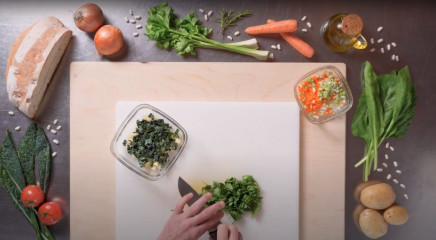

 ...Great Italian Goodies!