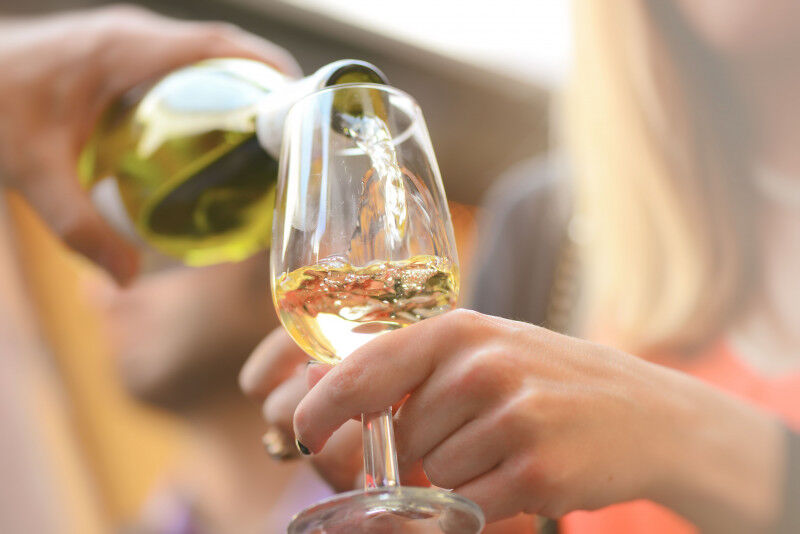
Vintage - Italian White Wine
What Defines the Finest Vintages for Italian White Wines?
Among the numerous elements—both natural and human—that influence the quality of a wine, the most unpredictable and least controllable is certainly the year of production (known as the vintage).
Let us consider what the wine itself offers: in an average vintage, the wines are often more approachable, ready to drink sooner, celebrated for their freshness and drinkability. In contrast, great vintages are marked by austerity, complexity, and that elusive ability to age gracefully. Personally, when it comes to Italian whites, I tend to favor the cooler and more extreme harvest years, as these often produce the most unique and memorable wines.
What Distinguishes White Wine Vintages from Red Wine?
The most apparent difference between white and red wines is their color, determined by their phenolic compounds. In whites, these phenolic substances, though varied and not yet fully identified, set them apart from reds, which are dominated by anthocyanins and tannins.
Red wines change color over time from violet and purple to ruby, garnet, and eventually orange. White wines progress from paper white and greenish to straw yellow, golden yellow, and amber.
Additionally, white wines typically boast higher acidity, especially malic acid, which endows them with their renowned freshness—often even greater than that of red wines.
It is crucial to highlight a wine’s liveliness, reflecting its brilliance, clarity, and color freshness. A healthy, well-preserved wine, no matter its age or type, shines with vibrancy. In contrast, dull or flat-colored wines often lack proper acidity and are generally less enjoyable.
Is It True That White Wines Should Be Consumed Young?
It’s important to remember that within a single vintage, the quality of white wines—just as with other types—can vary greatly. Italy’s vast geography means that regional climates differ substantially, so a specific vintage may excel in some areas while underperforming in others.
Generally, as a wine evolves, its aromas change in a sequence reflecting nature’s own order. Personal preference plays a major role: fresh, floral, and fruity notes are present first, followed by hints of ripe fruit and jam, and later by dried fruit. As the wine ages, vegetal and spice aromas may arise, eventually developing into complex bouquets with spicy, balsamic, roasted, animal, and dried flower (such as dried rose) notes, and subtle woody undertones.
- Young white wines: Showcase white and yellow flowers (such as hawthorn, vine flower, scrub rose) and light-fleshed fruits like peach and apricot.
- Complex white wines: Evolve into aromas of lime, acacia, broom, and richer fruits, including fresh almond, hazelnut, and ripe peach.
- Mature white wines: Reveal notes of dried and roasted fruit.
Which Italian White Wines Excel in Ageing?
Some of the most acclaimed Italian white wines for ageing are those with high acidity and a vibrant, citrus-driven profile, yet always retaining a core of freshness. These wines are scattered throughout Italy, especially among the prestigious DOCG and notable DOC regions:
Roero Arneis, Gavi, Soave Superiore, Albana di Romagna, Vernaccia di San Gimignano, Castelli di Jesi and Matelica Verdicchio Riserva, Fiano di Avellino, Greco di Tufo, Vermentino di Gallura, as well as Colli Tortonesi, Lugana, Trebbiano d’Abruzzo, Colli Orientali del Friuli, and Etna Bianco. All these wines shine for their longevity and their ability to evolve beautifully in the bottle.
How Many Years Can White Wine Age?
Mineral salts are essential for the longevity and evolution of a white wine in the bottle. However, not all long-lived whites are defined by pronounced salinity: consider the legendary Trebbiano d'Abruzzo by Valentini, a wine that achieves remarkable ageing potential through its unique character and careful winemaking.
How Long Can White Wine Be Stored?
Many variables affect the longevity of white wines: the original grape variety, the vinification method, and how the wine is aged in the bottle. Some grapes are naturally more suited to ageing, and the winemaking process plays a crucial role in the wine's preservation. The storage environment is also fundamental: wine must be shielded from light, heat, and all pollution, including noise. The optimal conditions are dark, humid, cool, and quiet cellars, reminiscent of the traditional Italian wine caves.
How Long Does White Wine Last in the Bottle?
In Italy, white wines are generally consumed young—typically within the first or second year after release. This is sometimes regrettable, as many whites begin to develop interesting complexity from the third or fourth year onwards, gradually losing their initial floral and fruity freshness and shifting toward deeper, more nuanced expressions that may diverge from the original grape characteristics.
The Most Memorable Vintages for Italian Whites
Vintage 2004
One of the best years for Italian white wines, marked by excellent night-time temperature variations that enhanced aromatic complexity.
Vintage 2005
A particularly strong year for white grapes from the islands and southern regions, especially notable for Pietramarina from Benanti.
Vintage 2007
Fluctuating weather produced outstanding whites in Abruzzo, especially Trebbiano from the legendary Valentini.
Vintage 2009
High temperatures and decent rainfall resulted in a stellar harvest for Veneto whites, including Soave by Pieropan.
Vintage 2010
A mixed vintage, but exceptional for Umbria, especially Cervaro from Castello della Sala.
Vintage 2011
A hot, challenging year that nonetheless saw many Italian whites express remarkable intrigue and character.
Vintage 2013
A cooler season, ideal for whites from Marche, like the acclaimed Verdicchio dei Castelli di Jesi Riserva by Villa Bucci.
Vintage 2014
Despite being difficult in terms of quality and quantity, this year surprised many with excellent whites, thanks to wise decisions in both vineyard and cellar.
Vintage 2017
Marked by a huge drop in production, but the surviving whites have shown great depth and ageing potential.
Vintage 2020
Dubbed the 'clean' vintage, it benefited from reduced pollution due to Covid-19, producing whites of optimal grape quality and aromatic purity.
How to Select a Quality White Wine by Vintage
For white wines, the old adage holds true: wine always needs time. There is no absolute rule for how long a wine will shine, especially for whites. The passing of time is crucial to understanding a wine’s evolution, and a wine is often considered great when it can maintain its pedigree and signature traits over the years—proving its worth through patience and maturity.
all.sign in to leave a review