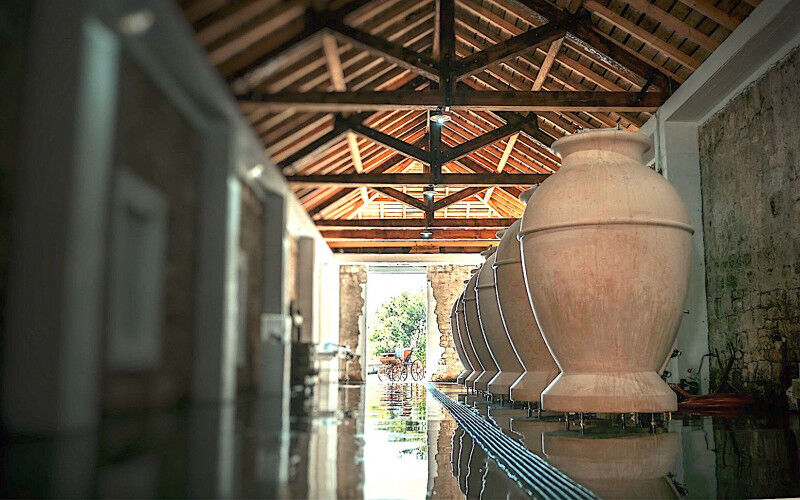
The Sensory Renaissance of Amphora Wines
To some, amphora wines appear as a fleeting novelty, but for those who craft them, these ancient vessels unlock a profound, delicious intimacy between the grape and its native soil. Imagine pouring a glass whose aromas and flavors have been gently coaxed by the earth itself. Amphorae are more than simple containers; they are time-honored guardians of flavor, once used to carry not only wines but also grains and oils across empires. Their clay walls cradle each drop, subtly influencing the wine as it breathes and matures.
The story of amphorae is rooted in the sun-dappled landscapes between Italy and Slovenia, where fragments of history are still unearthed from the soil. But the beating heart of this tradition lies in Georgia, where winemaking in Qvevri—massive, egg-shaped clay vessels—has been so vital that the region has earned UNESCO World Heritage status. Here, wines are fermented and aged below ground, surrounded by the cool embrace of the earth, producing aromas and textures that are hauntingly primal and beautifully complex.
Unveiling the Amphora: More Than Just a Vessel
At its core, the amphora is a handcrafted terracotta jar, perfected over millennia, with its most influential legacy blossoming in Georgia. This region—often called the cradle of winemaking—boasts archaeological finds of grape seeds dating back to 6000 B.C. Imagine the flavors those first winemakers must have tasted: fresh, wild, earthy, and utterly unique. To this day, the tradition is alive, and every amphora-aged wine is a sip of living history.
Opus Signinum: The Roman Secret to Flavorful Aging
The phrase Opus signinum conjures images of bustling Roman construction, yet it is also a material that modern artisans are rediscovering. Opus signinum, or cocciopesto in Italian, is a blend of crushed tiles and mortar, pressed and shaped with loving care. Once used for building aqueducts and baths, it now finds new life as a vessel for wine, lending subtle minerality and structure—each jar a bridge between ancient ingenuity and contemporary craft.
Tenuta di Ghizzano: A Tuscan Fairytale in Every Sip
The narrative of Ginevra Venerosi Pesciolini and her estate feels like a sensory journey through Tuscany itself. Picture a hamlet woven from golden fields, winding lanes, and the scent of wild herbs drifting on a summer breeze. The villa, surrounded by centuries-old olive trees and lush vineyards, offers a feast for the senses—each bottle echoing the sun-warmed soil and the rhythmic hum of the countryside.
Beneath the romance, however, is a story of resilience and vision. Together with her sisters Lisa and Francesca, and their mother Carla, Ginevra transformed the estate into a beacon of sustainable luxury. Their wines, grains, oils, and vegetables are not just products; they are expressions of place, crafted with organic and biodynamic principles since the early 2000s. Growth, here, was hard-won but deeply rewarding—a triumph of flavor, family, and earth.
A Winemaker’s Journey: Ginevra’s Path to the Vineyard
“I didn’t set out to be a winemaker,” confides Ginevra. “My father managed the farm, but his heart was elsewhere. As a young woman, working among the vines was simply not an option in my family. Instead, I found fulfillment in publishing—until fate called me home. When I had to choose between a career in Milan or joining our family’s legacy, my father asked me to stay. That moment changed my life, and now each harvest is a new chapter in our story.”
The Hidden Flavors of Ghizzano: A Place to Savor
Ghizzano is more than a dot on the map near Peccioli in Pisa—it is an undiscovered trove of flavors and traditions. Nestled among rolling hills, just 30 kilometers from the sea, this patchwork of vineyards and woodlands yields wines with unique depth and character. Few travelers know its secrets, making each visit—and every bottle—a true discovery for the senses.
Terre di Pisa DOC: Sangiovese and the Art of Place
The Terre di Pisa DOC, founded in 2011 and championed by Ginevra as vice-president since 2018, is a testament to the region’s commitment to authenticity. “The challenge was convincing producers to step away from the familiar Tuscan IGT label, renowned thanks to neighbors like Bolgheri. But our soils, and our Sangiovese, tell a story only we can share. By focusing on native grapes, we let the terroir sing in every glass.”
Veneroso: The Signature of Tenuta di Ghizzano
“For me, there was never any doubt. Our Veneroso belongs to our DOC, and our faith has been rewarded with loyal fans. Larger producers may face different risks, but our devotion to the truth of our land shines through.”
The name Pisa is synonymous with history and artistry. Yet, as Ginevra observes, too many visitors wander Pisa’s ancient streets only to be whisked off to Chianti. She dreams of a day when food and wine lovers seek out the delicately perfumed wines, local cheeses, and golden olive oils of Terre di Pisa instead.
Tenuta di Ghizzano: Where Taste and Tradition Meet
The Venerosi Pesciolini estate is a living museum of flavor—a 14th-century villa surrounded by 300 hectares of nature. Here, only 40 hectares are reserved for vines and olive trees, with the rest a mosaic of woods and fields alive with the scent of wildflowers and ripe fruit.
Ginevra shares, “Organic and biodynamic farming was a leap of faith, but our land’s purity made it inevitable. Our olive oil is grassy and peppery, our chickpeas nutty and tender, our pasta golden and toothsome. All are for sale at our estate shop, each bite and sip a testament to our land’s generosity. Until now, we’ve shared these treasures mostly with our neighbors, but we are ready to welcome the world.”
Mimesi: A Symphony of Nature in a Glass
One of Ginevra’s most soulful creations is the Mimesi line—wines that shimmer with authenticity. The Vermentino, an IGT Costa Toscana, dances on the palate with saline freshness and citrus blossoms, while the Sangiovese, now part of the Terre di Pisa DOC, unfolds with layers of wild cherry, forest floor, and a whisper of Tuscan herbs.
The name Mimesi honors Aristotle’s idea of “natural imitation”—a philosophy that comes alive in every sensory detail. Labels are cotton, boxes are recyclable cardboard, and every texture invites a lingering touch. Ginevra says, “I want our wines to feel as natural as they taste, echoing our oldest vines and the patience of our land.”
The 2018 Sangiovese is fermented in cement, then aged in earthenware, preserving a silken texture and vibrant fruit. The 2020 Vermentino rests in terracotta amphorae, absorbing notes of stone and sun. Both vessels are “living,” gently shaping the wine’s soul without masking its origin.
Taste them side by side: the Sangiovese, with its earthy complexity and supple tannins, and the Vermentino, boasting structure, body, and a mouthwatering, persistent acidity—an ideal companion for grilled seafood or a Tuscan panzanella salad.
The Craft of Cocciopesto: Drunk Turtle’s Modern Alchemy
In Perignano, Pisa, Drink Turtle crafts amphorae from opus signinum, reviving an ancient practice with a modern twist. Each vessel is made with the unhurried care of its namesake turtle—a slow, attentive process that echoes the patient maturation of wine within.
Co-founder Enzo Brini, an oenologist steeped in the traditions of Montepulciano, embarked on this adventure with his father, blending arcane Roman recipes with contemporary innovation. “While terracotta and cement had their moment, we wanted something different—something that would cradle the wine and elevate its purity.”
Cocciopesto vs. Terracotta: The Taste of Tradition
The journey began with a study of ancient building mortars, guided by Vitruvius’ first-century De Architectura. In Roman times, opus signinum was used for cisterns, baths, and terraces—spaces where water and flavor mingled. Today, it brings those same qualities to wine, offering gentle humidity control and subtle mineral nuance.
Brini notes, “Cocciopesto is less porous than terracotta, similar to cement, but without the risk of imparting heavy metals. We air-dry rather than bake, allowing us to infuse elements that add complexity to the wine’s bouquet.” Their perfected blend features terracotta, stones of varying size, marble, travertine, and just a touch of cement, poured into specially crafted molds for a seamless finish.
Tasting the World: Cocciopesto’s Global Appeal
Over half of Drink Turtle’s amphorae are shipped abroad, where brewers and distillers as far away as Belgium experiment with their flavor-enhancing qualities. Imagine savoring a beer or spirit aged in these vessels—a subtle interplay of minerals, earth, and time in every sip.
A New Era: Earthenware’s Versatility in the Cellar
“By adjusting thickness up to 10 centimeters, we can tailor the permeability of each amphora,” Brini explains. This innovation lets winemakers fine-tune how much oxygen interacts with their wine, shaping structure, mouthfeel, and flavor with precision—making amphorae as versatile as they are beautiful.
Flavor Alchemy: How Amphorae Transform Wine
Curious about the flavor differences? Brini reveals, “Terracotta gives wine a distinct earthy backbone, especially early on. Cement, if unglazed, imparts mineral undertones. Our cocciopesto vessels, however, are remarkably neutral, lending a gentle sweetness—a sensation of plushness that lets the true character of the grape shine.”
Cocciopesto: Ancient Wisdom for Modern Palates
History is an endless source of inspiration for the kitchen and the cellar. Roman engineering left us opus signinum, a marvel of utility and subtlety. Today, cocciopesto is not just an artifact; it’s a symbol of sustainability and artistry for winemakers who want to forge an intimate connection between grape, vessel, and drinker.
Wine, like cocciopesto, is the product of imagination and care. Both are shaped by hands, time, and a sense of place. In a world hungry for authenticity, these materials connect us to the land and to the rituals of sharing food and drink at the table.
Cocciopesto’s Place in the Future of Wine
Will cocciopesto become the gold standard for fermentation? Perhaps not universally, but its unique properties are expanding the creative possibilities for winemakers who crave purity and complexity. It stands as a delicious alternative for those eager to experiment, taste, and share stories through their wines.
The Art of Aging: Choosing the Right Vessel
Terracotta, cement, stainless steel, and wood are the mainstays of the cellar. Choosing terracotta, especially, is a declaration: the winemaker’s intention is to let the grape’s voice sing, unmasked by oak or steel. Wines matured in amphora tend to be vivid, textural, and deeply tied to their origin—perfect partners for rustic breads, aged cheeses, and sun-kissed vegetables.
Sangiovese Mimesi: Taste the Future, Savor the Past
The proof is in the glass: Tenuta di Ghizzano’s Sangiovese Mimesi is a wine of grace and vitality, ready to delight now yet promising layers of flavor for years to come. Try it with slow-braised lamb or a wild mushroom risotto, and let each bite and sip transport you to the heart of Tuscany—where history, innovation, and appetite converge in unforgettable harmony.
all.sign in to leave a review