stefano:
Pasta primavera is a real family favorite, and this recipe makes it so easy to pull it all together. The veggies couldn't be easier or come together...
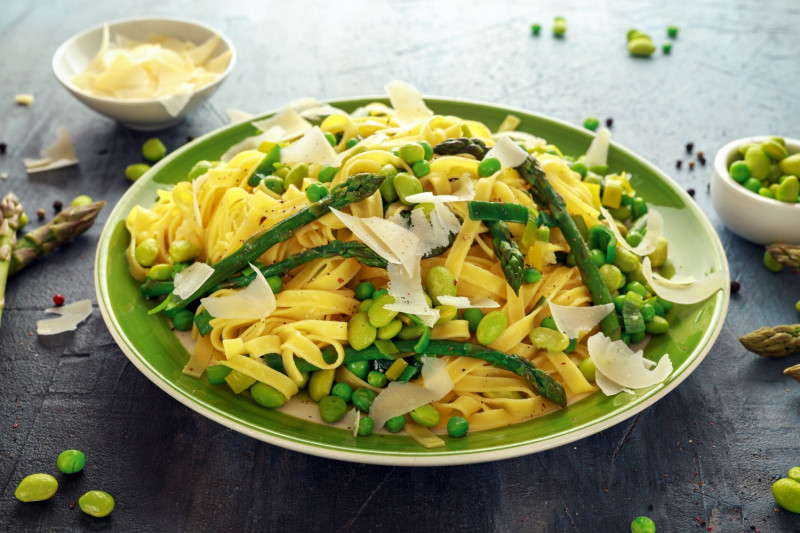
Often celebrated as Pasta Primavera, this dish is a vibrant ode to Italian seasonal cooking. In spring, the markets overflow with an array of green vegetables, allowing you to choose from a rich tapestry of fresh produce such as artichokes, asparagus, fava beans, and peas. These vegetables are not only bursting with flavor but also supply essential vitamins and minerals, particularly valuable as the weather grows warmer.
The philosophy behind this authentic Italian vegetable pasta is to use short cooking times and preserve the integrity of each ingredient. This ensures that the natural taste and nutrients of the vegetables remain intact. A quick toss with extra-virgin olive oil and a touch of robust garlic infuses the dish with Mediterranean character, elevating this Tagliatelle recipe to a staple worthy of any classic Italian kitchen. Your friends and family will likely request it again and again!
For those intrigued by Italian produce, discover more insights on seasonal Italian vegetables in our blog. If you're looking to make your own pasta from scratch, follow our guide for handmade pasta dough—it’s a game-changer for weeknight dinners and weekend feasts alike.
Subscribe to our newsletter for a weekly dose of authentic Italian recipes and culinary news straight to your inbox!
IngredientsTry it with...
Preparation
for 4 servings
Step
1
Of 4
Begin by sifting both the all-purpose and semolina flours onto your work surface, creating a mound. Form a well in the center of your flour.
Crack in the eggs, sprinkle with a pinch of salt, and gently whisk the eggs with a fork, gradually pulling in flour from the edges. Take care not to let the mixture spill.
Once the eggs are mostly combined and no liquid remains, knead the dough with your hands until it becomes soft, elastic, and no longer sticky.
Brush off any flour residue from your hands, dust lightly with semolina if necessary to prevent sticking, and continue kneading.
After about ten minutes—when the dough is silky and smooth—wrap it tightly in plastic wrap or a clean cloth. Let it rest at room temperature for 20 minutes. This resting phase is critical for dough extensibility and texture.
Step
2
Of 4
Once the dough has rested, it's time to roll it out. Use either a rolling pin or a pasta machine, depending on your preference.
Divide the dough into 2 or 3 portions, keeping the unused sections covered to prevent them from drying out.
If rolling by hand, flour the surface and roll each portion from the center outward until you achieve a uniform thickness of 1–2 mm. Evenness ensures the noodles cook evenly.
For those using a pasta machine, start with the thickest setting, passing the dough through 2–3 times and folding each time. Continue narrowing the setting, rolling until you reach the second-thinnest option. The goal is a thin, supple sheet.
Cut the dough into strips: you can use the pasta machine's cutter or, for a rustic touch, fold the sheet over several times (dusting with flour between folds) and slice into 0.5 cm wide ribbons using a sharp knife. Unravel the noodles and arrange them on a tray dusted with semolina or rice flour to prevent sticking.
Step
3
Of 4
Prepare all the spring vegetables: slice them finely, removing any fibrous outer parts or tough stems, and sort each type into its own bowl.
To keep the artichokes from oxidizing, immerse the slices in water with the juice of half a lemon.
Finely chop a selection of fresh herbs (such as parsley, chives, or basil) and reserve.
Heat a generous splash of extra-virgin olive oil in a large skillet over medium heat. Add the onion and a pinch of salt, sautéing gently until softened and aromatic.
Begin building your vegetable medley: add carrots first, followed by drained artichokes, zucchini, peas, fava beans, and asparagus—introducing each in order and sautéing briefly before the next addition. This layering technique ensures every vegetable maintains its texture and gains flavor.
Season with salt and pepper. If the pan dries out, splash in a little water and let the vegetables steam until just tender. Finish by stirring in your chopped herbs for a burst of freshness.
Step
4
Of 4
Bring a large pot of salted water to a rolling boil. Add the fresh tagliatelle and cook for 3–4 minutes, or until al dente.
Drain the pasta thoroughly and immediately transfer it to the skillet with your aromatic vegetable sauté.
Toss everything together over medium heat to marry the flavors. Serve at once, garnishing each portion with a generous grating of aged Parmesan cheese for a final flourish.
Try it with...
Filippo Bartolotta
...Great Italian Goodies!
stefano Monday 15th of March 2021
On board with spring veggie sauce
Pasta primavera is a real family favorite, and this recipe makes it so easy to pull it all together. The veggies couldn't be easier or come together with any less effort than chopping and sautéing - we can all do that in my family, so this is a great one to make for my finicky little eaters - they love it too!