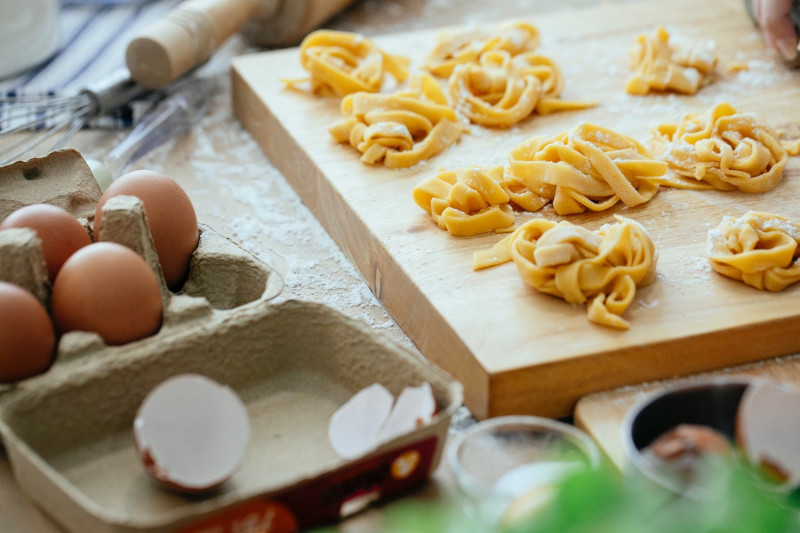
Fresh hand-crafted tagliatelle stand as one of the most celebrated symbols of Italian culinary heritage, cherished for centuries across the regions of Emilia-Romagna and beyond.
Characterized by their rustic and porous texture, these egg-based noodles are perfectly suited to embrace hearty sauces, making them a staple on festive tables and a versatile choice for everyday meals.
Homemade pasta might seem daunting at first, but you'll find that preparing your own tagliatelle is far easier than expected. The result is an unrivaled flavor and texture: a testament to authentic Italian craftsmanship.
Tagliatelle pairs beautifully with vibrant basil pesto, rich meat ragù (try our classic recipe), or any rustic sauce of your choice. Dive into our collection of tagliatelle recipes for more inspiration.
This recipe allows you to roll the pasta by hand for a traditional approach, or use a pasta machine for convenience. Both methods deliver authentic results—just choose what works for your kitchen.
Gather your family, roll up your sleeves, and create beautiful nests of fresh tagliatelle. Involve children in the process for a fun, hands-on culinary experience.
Subscribe below for more authentic Italian recipes, wine insights, and expert kitchen tips in the Mamablip newsletter.
IngredientsTry it with...
Preparation
for 4 servings
Step
1
Of 3
On a clean work surface or in a large mixing bowl, mound your flour and create a well in the center. Break the eggs, one at a time, into the well and add a generous pinch of salt.
Using a fork, gently whisk the eggs, gradually drawing the flour from the edges into the center. Continue to incorporate the flour until the mixture becomes too thick for the fork, then begin kneading by hand. Work the dough for about 10 minutes, striving for a smooth, elastic consistency. This traditional technique ensures a well-developed gluten structure, crucial for perfect tagliatelle.
Step
2
Of 3
If the dough feels overly sticky or too soft, incorporate additional flour as needed. Conversely, if it's too firm or dry, sprinkle in a bit of warm water to achieve the right texture. Shape the dough into a ball, then dust it lightly with flour or semolina.
Cover it with a clean cloth and let it rest for a minimum of 10 minutes. Resting relaxes the gluten, making the dough easier to roll out. When ready, place the dough on a lightly floured surface (semolina is a great choice for added texture).
Step
3
Of 3
With a rolling pin, begin flattening the dough from the center outward, aiming for thin sheets—real Italian tagliatelle is prized for its delicate thinness.
If you have a pasta machine, you can process the dough through the rollers, gradually decreasing the thickness setting until the desired thinness is reached.
Once rolled, fold the pasta sheets several times, dusting each layer with flour or semolina to prevent sticking. Use a sharp knife to slice the folded dough into ribbons about 0.5cm (0.2 inches) wide. Gently unfurl the strips to reveal beautiful tagliatelle.
Arrange the finished noodles on a tray dusted with flour or semolina to keep them separate and prevent sticking. Alternatively, use a pasta machine attachment for even slicing if available.
Try it with...
Filippo Bartolotta
...Great Italian Goodies!