tagAlt.Fresh homemade pasta pici

Traditional Hand-Rolled Pici Pasta: History and Technique

Craft Siena's iconic hand-rolled Pici: a time-honored, eggless pasta made with just a few basic ingredients.

  • ( Scored 5 on 1 reviews )

tania:

I always thought making pasta meant using a pasta machine, and that making the dough would mean using eggs which would make home-made pasta more diffi...

read all reviews...

Delve into the culinary heritage of Tuscany with this authentic hand-crafted Pici pasta recipe. Originating from the rural landscapes around Siena, Pici is a centuries-old pasta that exemplifies the rustic ingenuity of Italian home cooks. This method requires no special tools—just your hands and a flat surface—making it both accessible and deeply connected to its historical roots. The simplicity of Pici makes it an ideal starting point for anyone interested in exploring Italy’s diverse pasta traditions, and its tactile preparation is particularly engaging for children eager to learn foundational Italian cooking skills.

Hand-rolling thick, chewy strands of Pici connects cooks to an age-old ritual that predates industrial pasta and even the widespread use of eggs in dough. This recipe highlights the classic Sienese version, which is made without eggs—a characteristic that sets it apart from many other pasta types. While Pici is traditionally served with a robust Pecorino Romano cheese and black pepper sauce (Cacio e Pepe), its versatility shines with hearty ragùs such as Classic Tuscan Ragù or lighter vegetable sauces like Zucchini and Onion. Each pairing offers a distinct taste of Tuscan tradition.

Freshly made Pici brings an unmistakable sense of celebration to the table, echoing the communal spirit of Italian family gatherings. For those looking to perfect their pasta-making skills, explore more recipes and instructional resources in the Mamablip Pasta Course collection, or join a live pasta-making class and cook alongside experienced chefs. Subscribe to our newsletter for weekly insights into Italy’s culinary traditions, recipes, and food culture, delivered right to your inbox!

Ingredients

for 4 servings

Pici Pasta Ingredients

  • Semola flour 250 grams
  • All-purpose flour 250 grams
  • Water 250 grams
  • Extra-virgin olive oil 2 table-spoon

Try it with...

or show me more...

Preparation

for 4 servings

Step

1

Of 3

Blend and Knead the Dough

Begin by thoroughly combining the flour, water, and a pinch of salt in a large mixing bowl. Work the mixture by hand until a cohesive dough forms, then knead vigorously on a work surface for about 10–15 minutes. The goal is to achieve a dough that is smooth, elastic, and no longer sticky—a quality crucial for shaping the pasta. If the dough feels overly tacky, incorporate a small amount of semolina flour until the texture is right.
Wrap the dough in plastic or place it in a covered bowl, and rest it in the refrigerator for at least 1 hour. This resting period relaxes the gluten, making the dough easier to roll out and preventing shrinkage during shaping.

Step

2

Of 3

Hand-Roll the Pici Strands

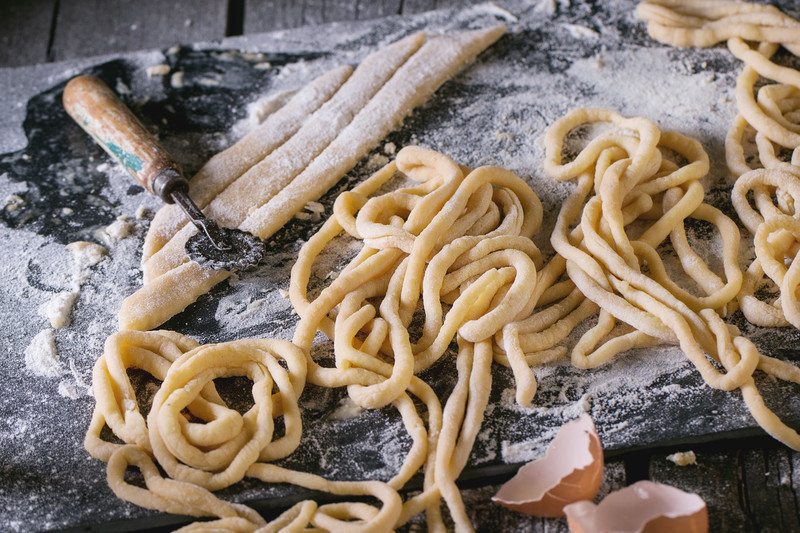
Once rested, cut off small pieces of dough and, on an unfloured surface, roll each piece with your fingers and the palms of your hands into long, thick, spaghetti-like strands. Aim for a diameter similar to a pencil, keeping the strands even in thickness. The technique is reminiscent of rolling clay worms and is central to achieving the characteristic chewy, rustic texture of Pici.
As you work, focus on maintaining gentle, even pressure—too much force can cause the strands to break, while too little will result in uneven pasta. The finished Pici should be supple and able to stretch without tearing, reflecting their hand-crafted origins.

Step

3

Of 3

Dust, Separate, and Serve

Lightly coat the finished Pici with semolina flour to prevent sticking. Arrange the noodles in loose nests or on a tray, making sure they do not overlap excessively. This ensures that the strands remain distinct and cook evenly.
Pici pairs exquisitely with bold and simple sauces alike. Serve them with a classic Cacio e Pepe for a true taste of Tuscany, or experiment with other regional condiments. Celebrate the texture and flavor of your hand-rolled pasta with family and friends, just as generations of Tuscan cooks have done.

Try it with...

or show me more...

Filippo Bartolotta

Filippo Bartolotta

...Great Italian Goodies!

You may like

Reviews

tania Tuesday 9th of March 2021

The easiest pasta recipe!

I always thought making pasta meant using a pasta machine, and that making the dough would mean using eggs which would make home-made pasta more difficult. Then I discovered Pici. They're so easy, eggless, and the family loves them!

all.sign in to leave a review