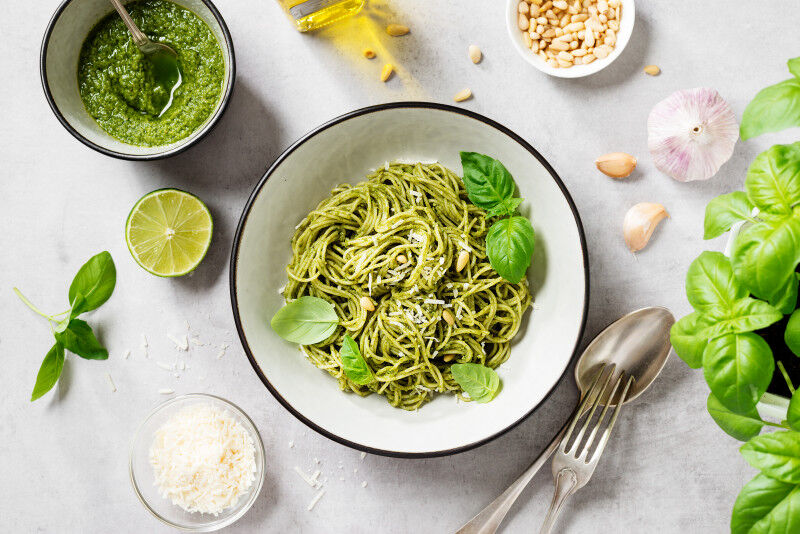
The Story and Taste of Trenette al Pesto: Liguria’s Green Jewel
Pesto: The Emerald Essence of Liguria’s Cuisine
Pesto is the heart and soul of Ligurian cooking, a culinary treasure rooted in the sun-drenched hillsides and terraced gardens of the Italian Riviera. This vibrant green sauce, known for its invigorating aroma and delicate flavor, has also left its mark along the Mediterranean, with variations like the Provençal pistou (sometimes enriched with tomato) found along the French coast.
Over generations, pesto has inspired countless family recipes and spirited debates over the "right" way to make it. Broadly, two main styles developed in Liguria’s diverse lands:
- The “di Ponente” style, representing the robust and punchy Genoese pesto, dominant on the western Riviera.
- The “di Levante” style from the east, which uses less garlic and focuses on a milder, more balanced flavor.
Whichever style you choose, Ligurian pesto is a celebration of local pride, seasonal harvest, and a time-honored tradition that unites generations around the table.
Tracing the Roots of Pesto: From Ancient Mortars to Modern Kitchens
Liguria’s pesto is a dish steeped in history, carrying the flavors and culture of its people through the centuries. Its origins can be traced as far back as Roman times, where Virgil in his "Bucolics" describes a rustic meal of unleavened bread topped with "moretum"—a punchy blend of garlic, herbs, and cheese pounded together, much like the pesto we know today.
Pesto’s evolution continued as Mediterranean trade introduced new ingredients like oil seeds (pine nuts) and later, the aromatic basil that now defines the recipe. Originally, a tangy cheese similar to yogurt was the sauce’s creamy binder, but over time, olive oil took center stage, and cheeses like pecorino and grana added depth.
Resourcefulness has always been a Ligurian virtue. When Sardinian pecorino became too costly, Genoese cooks turned to Bra, a hard cow’s milk cheese from neighboring Piedmont, adapting the recipe while maintaining its essence. This adaptability, paired with the region’s love for garden-fresh ingredients, helped pesto become a culinary icon recognized far beyond Liguria’s borders.
Essential Ingredients of Authentic Ligurian Pesto
The soul of pesto lies in its simplicity and the quality of its ingredients, each one tied to Liguria’s unique terroir and ancient traditions:
- Fresh basil leaves (ideally small, fragrant varieties from Prà)
- Delicate pine nuts, harvested from Mediterranean stone pines
- Plump garlic cloves, often from the local Vessalico variety
- Rich, creamy butter (sometimes used in traditional home recipes)
- Cold-pressed extra virgin olive oil, especially Taggiasca variety
- Parmigiano Reggiano or Grana Padano cheese, for nutty complexity
- Sardinian Pecorino cheese, adding a savory, tangy note
- Sea salt, to enhance every fresh flavor
Each ingredient tells a story of Liguria’s landscapes, from the terraced hillsides to the bustling local markets. Their careful combination in a mortar and pestle preserves the traditions and flavors cherished by generations. ► Discover the Classic Recipe
Traditional Ligurian Pasta Shapes for Serving Pesto
Pesto’s vibrant flavors are best enjoyed when paired with the region’s iconic pastas, each with its own story and connection to Ligurian culinary heritage. Trenette and tagliolini, long and slender, are the classic choices, intertwining perfectly with the aromatic green sauce. Trofie, a hand-rolled pasta shaped like little twists, and pillowy potato gnocchi also make delightful companions for pesto, echoing the region’s inventive use of simple, local ingredients.
Ligurian families have passed down these pasta traditions for centuries, often gathering to make them by hand during special occasions and holidays—a testament to the strong bonds between food, community, and celebration in this picturesque coastal region.
Preserving Freshness: How Long Does Homemade Pesto Last?
Freshly made pesto is best enjoyed at its peak, when the basil’s fragrance and color are most vibrant. Stored in the refrigerator, pesto will typically keep for a few days, but the aromatic profile of basil quickly fades. For an authentic experience, savor your pesto soon after it’s made, just as Ligurian families have done for generations, celebrating the fleeting bounty of the season.
The Story Behind Tagliolini: Liguria’s Silken Noodles
Tagliolini are long, slender ribbons of pasta, crafted with either semolina and water or, in homemade versions, with flour and eggs. Their name comes from "tagliare," meaning "to cut," as these soft sheets are rolled thin and sliced with precision. Born from the ingenuity of Ligurian cooks, tagliolini cook quickly and deliver a tender, supple bite—perfect for absorbing the bold flavors of pesto while maintaining their own delicate texture.
Once cooked al dente, tagliolini embody the balance between tradition and innovation that defines Ligurian cuisine—a region where even the simplest pasta tells a story of family and land.
Discovering Trenette: Liguria’s Beloved Pasta Classic
Trenette, a hallmark of Ligurian pasta-making, are long, flat strands with a rectangular or oval cross-section, slightly broader than linguine. Traditionally made as a durable, dried pasta, trenette have been a pantry staple for generations of Ligurian families. Their broad surface and satisfying bite make them ideal for capturing every drop of fresh pesto, merging history and flavor in every forkful.
Trenette or Tagliolini with "Avvantaggiato" Pesto: A Celebration of Land and Season
("Avvantaggiato" means "enriched")
In the eastern part of Liguria, cooks have long enhanced their pasta dishes by adding garden-fresh vegetables to the pot—a tradition known as "avvantaggiato." This practice, which began among the rural communities of the Levante, soon spread throughout the region as a way to celebrate the bounty of the land.
To prepare this classic dish, green beans and diced white potatoes are boiled together, then trenette or tagliolini are added to the same pot midway through cooking. Once everything is perfectly tender, the vegetables and pasta are drained together and dressed with a generous spoonful of pesto, creating a vibrant, nourishing meal that captures the spirit of Ligurian home cooking and the interplay between land and sea.
Pairing Wine with Pesto: Local Vines for Liguria’s Signature Sauce
Pesto’s aromatic bouquet and fresh, herbal character call for wines that echo the flavors of Liguria’s sunlit hills and salty breezes. Young, lively white wines with crisp acidity and subtle floral notes are the perfect match, highlighting the freshness of basil and the rich complexity of the sauce.
- Vermentino Colli di Luni DOC – a coastal white, bright and citrusy, with a hint of sea air
- Pigato Riviera Ligure di Ponente DOC – native to western Liguria, offering floral and mineral notes
- Müller Thurgau Alto Adige DOC – a mountain white, fresh and aromatic, pairing beautifully with pesto’s herbal qualities
Each glass brings you closer to the essence of Liguria, making for an unforgettable meal in good company. 
Where to Savor Authentic Pesto in Liguria: Top Local Restaurants
For those eager to taste pesto at its finest, Liguria offers a wealth of welcoming trattorias and osterias, many of which have been perfecting their recipes for generations. These establishments celebrate the region’s culinary heritage and provide a true taste of local tradition:
- La Brinca (Ne-Genoa) – renowned for its commitment to local ingredients and time-honored recipes
- U Giancu (Rapallo-Genoa) – famous for its lively atmosphere and expertly crafted pesto dishes
- Baccinin Du Caru (Fado-Genoa) – a family-run spot where tradition and hospitality go hand in hand
Visiting these cherished eateries is not just a meal—it’s an immersion into Liguria’s vibrant food culture, where every bite tells a story of land, sea, and community.
all.sign in to leave a review