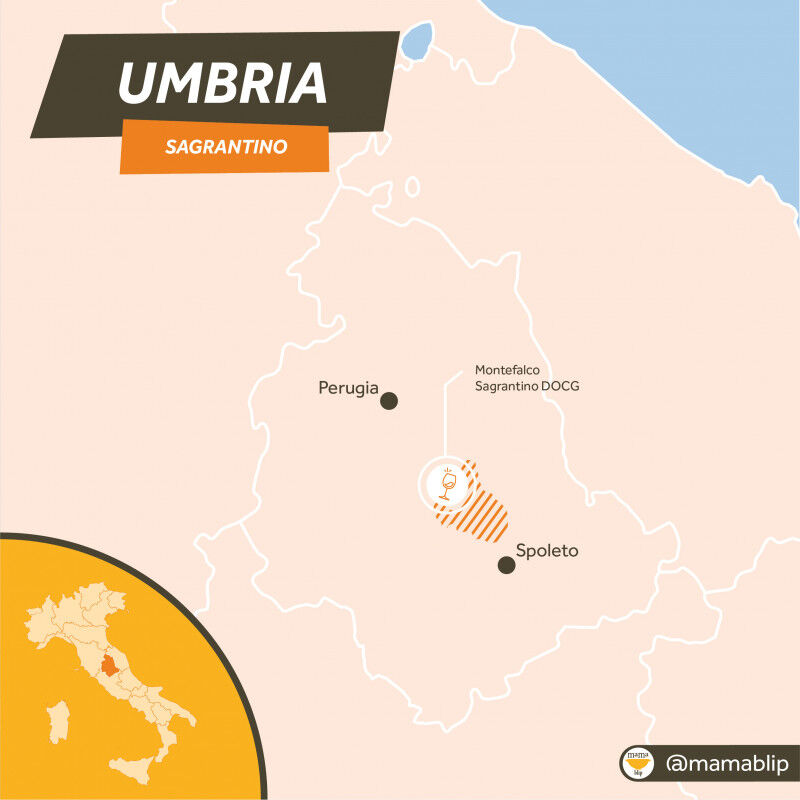
Discover Sagrantino: Umbria’s Bold Black Grape
- Sagrantino is a native black grape variety from Umbria, Italy’s green heartland.
- Renowned for producing some of the most powerfully tannic wines in the world.
- Yields both robust dry reds and lusciously sweet passito wines.
- Sagrantino wines are characterized by their intense purple hue, full body, and brisk acidity.
- Aromatically, expect notes of ripe plum, licorice, cracked black pepper, and black olive.
- Dry reds typically feature alcohol content between 13.5% and 15%.
- The picturesque village of Montefalco is the epicenter of Sagrantino production.
Unveiling the Sagrantino Grape
Sagrantino, a rare and captivating black grape, crafts both deeply structured dry reds and decadent passito dessert wines—always from 100% Sagrantino fruit. Its spiritual home is Umbria in central Italy, where rolling hills and medieval villages frame the vineyards.
This vigorous, low-yielding grape is celebrated for its thick, tannin-packed skins. Its tannic punch even surpasses that of other Italian greats like Aglianico, Nebbiolo, and international varieties such as Cabernet Sauvignon and Tannat.
Sagrantino's reputation soared when it was elevated from Montefalco DOC to the prestigious Sagrantino di Montefalco DOCG in 1992, marking a new era for this distinctive wine.
Exploring Sagrantino’s Flavor Spectrum
Sagrantino wines are a feast for the senses, their color so dense it borders on opaque. The dry styles burst with flavors of black plum, steeped tea, olive, and pepper, underpinned by earthy, spicy notes of licorice and cinnamon. In passito form, the wine becomes a rich elixir, layering blueberry and raisined fruit with a velvety sweetness.
Both expressions share a full-bodied, tannic structure, marked by vibrant acidity and a warming, generous alcohol presence.
A Tour of Sagrantino Wine Styles
Sagrantino thrives around the Umbrian village of Montefalco, where it shines in two principal forms: the monumental dry Montefalco Sagrantino and the opulent, sweet Passito Sagrantino, both granted DOCG status. Additionally, Montefalco Rosso DOC offers a Sangiovese-forward blend where Sagrantino’s boldness provides depth and intrigue.
Montefalco Sagrantino
This flagship expression is a symphony of dark fruit, black pepper, and licorice, all wrapped in muscular tannins. Its aging potential is legendary—by law, it must mature for at least 37 months, with a minimum of 12 in oak. Time in bottle melds its flavors into a seamless, velvety experience that balances savory, earthy, and sweet fruit notes. Alcohol levels range from 13.5% to 15%.
Passito Sagrantino
For the passito, partially dried grapes concentrate sugars and aromas, creating a luscious, syrupy wine reminiscent of Recioto della Valpolicella. The palate delights with flavors of baked fruit, raisins, and supple tannins. Extended aging (37 months, with at least four in bottle) yields complexity and depth, and this style can reach up to 18% alcohol. It is rarer than the dry red but offers a truly decadent experience.
Montefalco Rosso
Here, Sangiovese sets the stage while Sagrantino (10–25%) adds backbone and character. The result is a harmonious, fruit-driven red with layers of cherry, plum, and spice. Aged for a minimum of 18 months (no oak requirement), it delivers a smooth, accessible introduction to the region’s style, with typical alcohol around 13.5%.
Perfect Pairings: Sagrantino at the Table
Sagrantino’s intensity and complexity make it a versatile partner for food, elevating meat, vegetarian, cheese, and even dessert dishes. When matching, consider the wine’s tannins, acidity, and layers of fruit and spice.
Montefalco Sagrantino Pairings
Meat
- Game meats, such as wild boar or venison
- Slow-braised beef or pork
- Grilled or roasted steak
- Lamb, especially with rosemary
- Dishes featuring earthy truffles or wild mushrooms
- Hearty Italian sausages
Vegetarian Delights
- Creamy mushroom risotto
- Cheese-laden risotto
- Classic Margherita or seasonal vegetable pizza
- Eggplant Parmesan, rich and savory
- Oven-roasted vegetables with Mediterranean herbs
Cheese
- Aged, hard cheeses like Pecorino or Grana Padano
- Parmigiano Reggiano
Passito Sagrantino Pairings
Cheese
- Pungent blue cheeses (Gorgonzola, Stilton)
Desserts
- Decadent chocolate cake
- Cheesecake with dark fruit compote
- Classic fruitcake or panforte
Where Sagrantino Shines: Notable Regions & Appellations
Nearly all the world’s Sagrantino is born in the sun-drenched hills around Montefalco, Umbria, where the mix of clay, sand, and limestone soils provides the ideal terroir for this grape. The trio of Montefalco Sagrantino DOCG, Passito Sagrantino DOCG, and Montefalco Rosso DOC showcase its range. Over 90% of Sagrantino’s global production hails from this region.
Small plantings can also be found in Australia, where winemakers often soften Sagrantino’s fierce tannins for a fruit-forward style, and in the United States in regions like California and Washington, where the grape is a newcomer to adventurous wine programs.
The Fascinating Origins of Sagrantino
Sagrantino’s story is steeped in mystery and heritage. First referenced in 16th-century Umbrian records as a wine for religious ceremonies, its legacy may even reach back to Roman times—Pliny the Elder praised a potent red from Montefalco that many believe was Sagrantino. The grape’s name may derive from “sacrestia,” evoking its historic ties to communion wine.
For centuries, Sagrantino was primarily crafted as a sweet passito, with the robust dry style only rising to prominence in the late 20th century as palates shifted and winemaking evolved.
Crafting Sagrantino: Winemaking Traditions
Montefalco Sagrantino
This dry, powerful wine is made exclusively from Sagrantino grapes, with winemakers extracting deep color and robust tannins during extended skin contact. Fermentation is carried out to dryness, followed by maturation—often in oak—to impart further structure and spice. Legal requirements demand at least 37 months of aging, including a year in oak, to allow the wine’s formidable elements to harmonize.
Passito Sagrantino
Here, handpicked Sagrantino grapes are dried on straw mats for two months, intensifying their sugars and aromas. After gentle pressing, fermentation with skins produces a velvety, sweet wine. It matures for over three years, including four months in bottle, resulting in a dessert wine of remarkable depth and richness.
Montefalco Rosso
Blending Sangiovese (dominant) with 10–25% Sagrantino, this wine is aged for at least 18 months. It’s crafted for approachability, with no mandatory oak aging, and highlights the region’s versatility.
Sagrantino’s Global Cousins: Similar Wines
Montefalco Sagrantino DOCG
- Châteauneuf-du-Pape (France)
- Bandol (France)
- Zinfandel (California)
- Right Bank Bordeaux (France)
- Rioja Reserva and Gran Reserva (Spain)
- Primitivo (Italy)
- Negroamaro (Italy)
- Amarone della Valpolicella (Italy)
- Ripasso della Valpolicella (Italy)
Passito Sagrantino DOCG
- Recioto della Valpolicella (Italy)
- Port (Portugal)
Montefalco Rosso
- Chianti Classico (Italy)
- Barossa Shiraz (Australia)
- Corbières (France)
Sagrantino: Intriguing Facts
- Sagrantino surpasses Nebbiolo in tannin content, making it one of the boldest red wines on earth.
- It boasts some of the highest antioxidant levels found in any red wine variety.
- Historic records and traditions suggest Sagrantino was originally used for sacred ceremonies and communion.