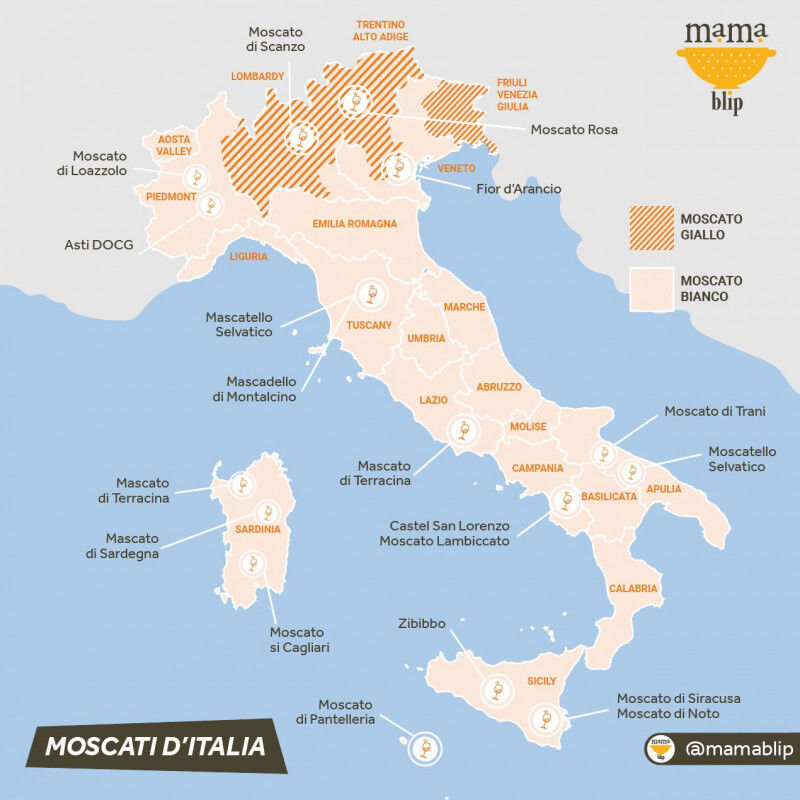
The World of Moscato: History, Diversity, and Perfect Pairings in a Glance
- The Moscato (Muscat) family is immense, boasting over 200 recognized grape varieties. This astonishing diversity allows Moscato to be made into a dazzling array of wines, from delicately sweet sparklers to complex fortified styles enjoyed around the world.
- Experts in wine history often cite Moscato as the oldest Vitis vinifera grape, with roots tracing back thousands of years to ancient civilizations where it graced royal tables and religious ceremonies. Its long history is woven into the fabric of Mediterranean culture, making it a true heritage grape.
- This grape’s global journey is reflected in its many names—each a testament to the local traditions and terroir. You’ll find Moscato as Muscat Blanc in France, Zibibbo in Sicily, and Moscatel in Spain and Portugal, each with unique expressions shaped by their lands.
- The most prized Moscato grape is Muscat Blanc à Petits Grains (Moscato Bianco in Italy), renowned for its aromatic complexity and finesse. This variety forms the backbone of Italy’s most iconic Moscato wines, especially in the rolling hills of Piedmont.
- Expect enchanting aromas and flavors of peach, orange blossom, honeysuckle, musk, and that unmistakable fresh grape character. These notes make Moscato not just a drink, but an experience of springtime in a glass.
- With its naturally medium acidity, Moscato strikes a perfect balance between freshness and sweetness. This quality makes it extremely food-friendly and refreshing, whether served as an aperitif or with dessert.
- Moscato Bianco is the foundation for the beloved, low-alcohol, sweet and gently sparkling Moscato d’Asti from Piedmont. This wine is celebrated at Italian festivals and family gatherings, embodying the region’s joyful spirit and love for conviviality.
- Italy’s diverse terroirs offer a spectrum of Moscato wines: dry and mineral-driven in the Aosta Valley (Muscat de Chambave), luscious and sun-ripened in Calabria’s passito style, and robust, fortified treasures from Sardinia. Each style has evolved with local culinary traditions—dry Moscato pairs beautifully with seafood and light pastas, while sweet and fortified Moscato classics are ideal alongside pastries, fruit desserts, and blue cheeses.
- This noble grape features in DOC, DOCG, and IGT wines, showcasing the importance of regional authenticity and quality in Italian winemaking. Whether at a grand banquet or a simple family meal, Moscato finds a place at the table, celebrated in both time-honored recipes and modern cuisine.
Food pairing is at the heart of Moscato’s appeal. Its appealing sweetness and floral notes make it an excellent match for spicy Asian dishes, salty cured meats, and tangy cheeses. In its sparkling form, Moscato d’Asti is the ultimate companion for fruit tarts, light cakes, and traditional Italian desserts like panettone and tiramisu, while the dry versions shine with shellfish and salads. Fortified Moscato, with its rich and complex profile, is perfect with nutty biscotti or creamy blue cheese, creating a harmony of flavors that lingers long after the last sip.
