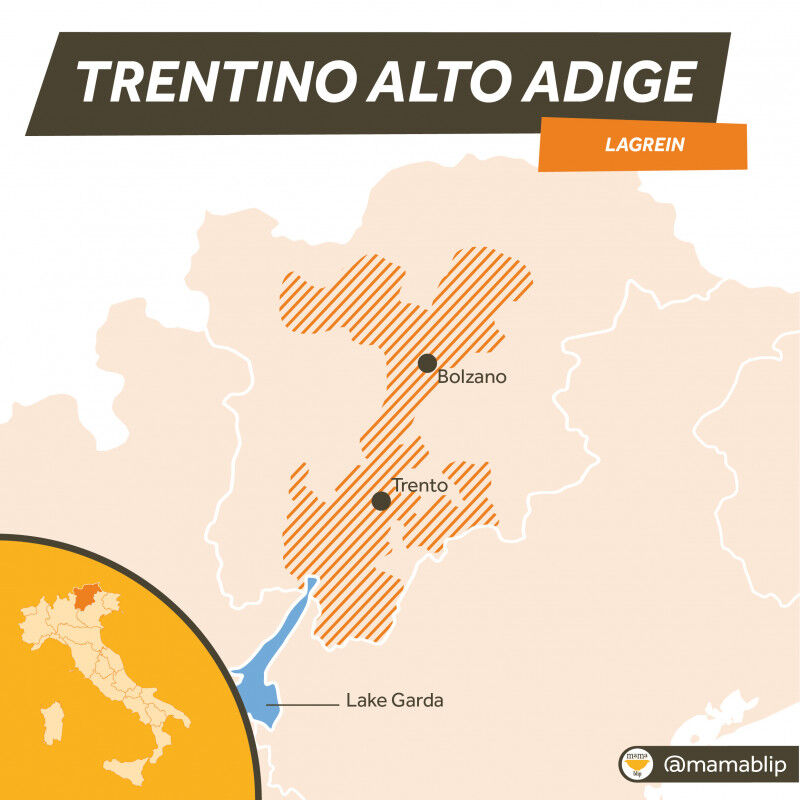
Lagrein: Quick Insights
- Lagrein is crafted into both dry red and rosé wines.
- This indigenous grape thrives in the Alto Adige region of northern Italy.
- Smaller plantings are also found in Australia and the United States.
- The wines display a deep ruby hue and reveal vibrant aromas and flavors of blackberry, black plum, black tea, pepper, orange zest, and dark chocolate, all underpinned by a distinct minerality.
- Lagrein is known for its pronounced acidity and firm tannins, making it suitable for extended cellaring.
- It features in several protected appellations such as Alto Adige/Südtirol DOC, Casteller DOC, Trentino DOC, and Valdadige/Etschtaler DOC.
- Covering 487 hectares, Lagrein represents 8.8% of the vineyard area in South Tyrol.
The Story Behind Lagrein
Lagrein has deep roots in the Alto Adige/Trentino region of northeastern Italy, with historical records dating its cultivation back to at least the 16th century.
This grape is responsible for bold, tannic dry reds known as Lagrein Scuro (or Lagrein Dunkel in German) and aromatic rosés called Lagrein Rosato (Lagrein Kretze).
Lagrein wines are characterized by intense black fruit, spicy black pepper, and delicate violet notes. With its notable presence, Lagrein covers a significant portion of South Tyrol’s vineyards.
Dive Into Lagrein’s Flavor Profile
Lagrein exudes an inky color and offers a sensory journey of black cherry, blackberry, blackcurrant, and pepper. Its natural acidity and abundant tannins are often harmonized through oak maturation, which imparts additional layers of spice and smokiness.
The red version of Lagrein is structured and robust, perfect for savoring on its own or paired with hearty dishes.
Lagrein rosé delivers a lively blend of black and red fruits, citrus zest, and savory undertones, making it a refreshing aperitif or a fantastic companion to lighter fare when served chilled.
Alcohol levels for dry red Lagrein hover around 13%, while the rosé typically sits at 12%. Both styles share a pleasing astringency that lingers on the finish.
Exploring the Styles of Lagrein Wines
Lagrein is predominantly produced as a dry red wine across several DOC regions. While it often shines as a single varietal, it is occasionally blended with native grapes like Teroldego, Schiava, or international varieties such as Cabernet Sauvignon and Merlot.
This grape also finds expression in a vibrant rosé style—a traditional favorite that is regaining popularity after a period of relative obscurity.
When you spot “Riserva” on a Lagrein label, it signifies the wine has enjoyed extended aging or boasts a higher alcohol content than standard DOC requirements.
Single-vineyard bottles, noted with the term “Vigna,” represent some of the highest quality Lagrein wines available.
While most Lagrein wines are best enjoyed within three years of release, top-quality selections can gracefully evolve for up to ten years.
Top Food Pairings for Lagrein
Lagrein delivers a memorable experience both as a standalone glass and as a partner to food. The red version’s bold structure, high tannins, and lively acidity make it a superb match for rich, flavorful dishes, while the rosé is ideal as an aperitif or with lighter starters and entrees.
Thanks to its vibrant acidity, Lagrein pairs especially well with dishes featuring higher fat content.
Perfect Pairings: Dry Red Lagrein and Riserva
- Starters: Cured meats, black olives, tomato bruschetta, grilled shrimp.
- Main Course (Meat & Fish): Tyrolean bacon dumpling soup, venison stew, beef bourguignon, goulash, pasta ragù.
- Vegetarian Options: Gourmet pizzas, truffle risotto, pasta with tangy tomato sauce, gnocchi with sage butter.
- Cheese: Aged varieties like Piave Vecchio, Gruyère, Comté, Grana Padano, Parmesan-Reggiano.
Pairing Ideas: Lagrein Rosé
- Appetizers: Cured meats, green olives, tomato bruschetta, grilled shrimp.
- Main Course (Meat & Fish): Pasta ragù, grilled fish, sushi, chicken and pork dishes.
- Vegetarian Choices: Gourmet pizzas, vegetable couscous, mushroom or tomato risotto, pasta with tangy tomato sauce.
- Cheese: Mature cheeses such as Piave Vecchio, Goat Cheese, Gruyère, Comté, Grana Padano, Parmesan-Reggiano.
- Dessert: Red berry fruit salad.
Tracing Lagrein’s Roots
Lagrein, a true native of South Tyrol, is believed to descend from the ancient Teroldego grape. Some DNA research has also revealed links to French varieties such as Syrah, Pinot Noir, and Dureza, prompting speculation that Lagrein’s distant ancestry may even reach France.
While the exact origin remains uncertain, the grape’s name hints at the Lagarina Valley in Trentino, where it has been referenced in local documents since at least the 1500s, possibly even earlier to the 1200s.
Some theories propose Greek origins, particularly near the city of Lagaria, but genetic evidence and historical cultivation point to Italy’s alpine northeast as Lagrein’s true homeland.
Despite the debate, its close genetic relationship with Teroldego firmly roots Lagrein in the mountainous regions of northern Italy.
The Modern Craft of Lagrein Winemaking
Lagrein’s naturally high tannin content and historically inconsistent yields once posed challenges for winemakers, resulting in wines that could be overly astringent.
Advances in viticulture and enology have since transformed Lagrein, allowing for richer, more refined, and approachable wines.
Thoughtful selection of Lagrein clones in the vineyard has contributed to more balanced wines, while shorter maceration times and careful barrel aging in the cellar have helped tame the grape’s robust tannins.
Classic dry red Lagrein is made with standard red winemaking processes, but with special attention to limiting tannin extraction. Wines labeled "Riserva" undergo even longer maturation, often in oak, for deeper integration and complexity.
Lagrein rosé typically uses the direct press method to achieve its vivid color and expressive fruit character, requiring only a gentle press to extract the grape’s distinctive hues and flavors.