Catarratto: Sicily’s White Grape Gem and Its Rich Heritage
- Catarratto is a renowned white grape variety thriving in the sun-drenched landscapes of Sicily, Italy.
- As one of the most widely cultivated white grapes in Italy, it plays a pivotal role in the island’s viticultural legacy.
- This grape is celebrated for producing dry, subtly aromatic wines that reflect the Mediterranean terrain.
- Expect enchanting notes of ripe peach, crisp apple, delicate honey, sun-dried wildflowers, and zesty lemon.
- Catarratto wines are typically light to medium-bodied with a balanced level of acidity, making them refreshingly lively.
- The average alcohol content ranges from 11.5% to 13.5%, contributing to its harmonious character.
- You’ll find Catarratto both as a stellar component in elegant blends and as a star in single-varietal expressions.
- It graces numerous IGT and DOC appellations, weaving its story into the fabric of Sicilian tradition.
The Origins and Significance of Catarratto in Sicilian Culture
Catarratto is deeply rooted in Sicilian soil, where generations of winemakers have crafted light, invigorating wines that mirror the island’s vibrant spirit. This grape’s high yields once led some to overlook its quality, but skilled producers soon discovered that, with attentive winemaking, Catarratto could reveal a symphony of flavors and textures. The grape’s evolution from a simple workhorse to a cherished varietal reflects the broader story of Sicilian wine—one of tradition, resilience, and innovation. Today, Catarratto is a testament to the island’s ability to transform humble beginnings into remarkable wines that capture the essence of Mediterranean life.
Exploring the Unique Clones and Winemaking Traditions of Catarratto
Within the Catarratto family, three primary clones are identified by the distinctive bloom—the waxy coating—on their skins: Catarratto Bianco Comune (with a pronounced bloom), Catarratto Bianco Lucido (with a glossier finish), and Catarratto Bianco Extra Lucido (almost entirely without bloom). While their appearances differ, these clones share the same genetic lineage. Historically, local artisans would recognize these subtle differences while tending their vineyards, preserving a mosaic of biodiversity that continues to enrich the region’s wines. Catarratto Bianco Comune often finds its way into larger production wines, while Bianco Lucido is prized for its nuanced character among discerning producers.
Flavors of Catarratto: A Taste of Sicilian Sun and Sea
In every glass of Catarratto, you’ll discover the sun-kissed essence of Sicily. The wine bursts with vibrant notes of lemon, ripe peach, crisp apple, and juicy pear, underpinned by whispers of honey and delicate floral tones. This delightful flavor profile, combined with moderate acidity, makes Catarratto exceptionally versatile at the table—a true reflection of the island’s bountiful orchards and aromatic countryside.
Distinct Catarratto Wine Styles: From Classic Simplicity to Refined Expression
Catarratto is crafted into both blends and single-varietal wines, typically in a dry, light, and fruit-forward style. While it is often celebrated for its approachable, easy-drinking nature, passionate winemakers across Sicily have honed their craft to coax out more complexity and depth from this grape, producing wines that range from charmingly simple to elegantly structured—each telling a unique story of the land and its people.
Pairing Catarratto with Sicilian and Global Flavors
The adaptability of Catarratto shines when paired with a variety of dishes, echoing the rich culinary traditions of Sicily. Its fruity profile and refreshing acidity make it an ideal companion to both classic island fare and international cuisine. Whether accompanying a leisurely seafood feast or enhancing the flavors of spicy Asian-inspired dishes, Catarratto bridges cultures and brings people together—just as it has for centuries in Sicilian villages and coastal towns.
- Appetizers: Fresh oysters, artisanal charcuterie, spicy tuna and tomato bruschetta, briny green olives.
- Meat and Fish: Grilled chili prawns, spaghetti carbonara, fragrant Asian fried rice, herb-roasted chicken, grilled sea bass, mild curries, and seafood risotto.
- Vegetarian / Vegetables: Spaghetti aglio e olio, penne arrabbiata, herb-infused roasted vegetables, four-cheese pizza, tuna and caper salad, gentle vegetable curries.
- Cheese: Creamy mozzarella, soft Brie, tangy goat cheese.
- Desserts: Peach meringue, nut-studded fruit cakes, and classic Sicilian pastries.
Famous Sicilian Wine Regions Showcasing Catarratto’s Diversity
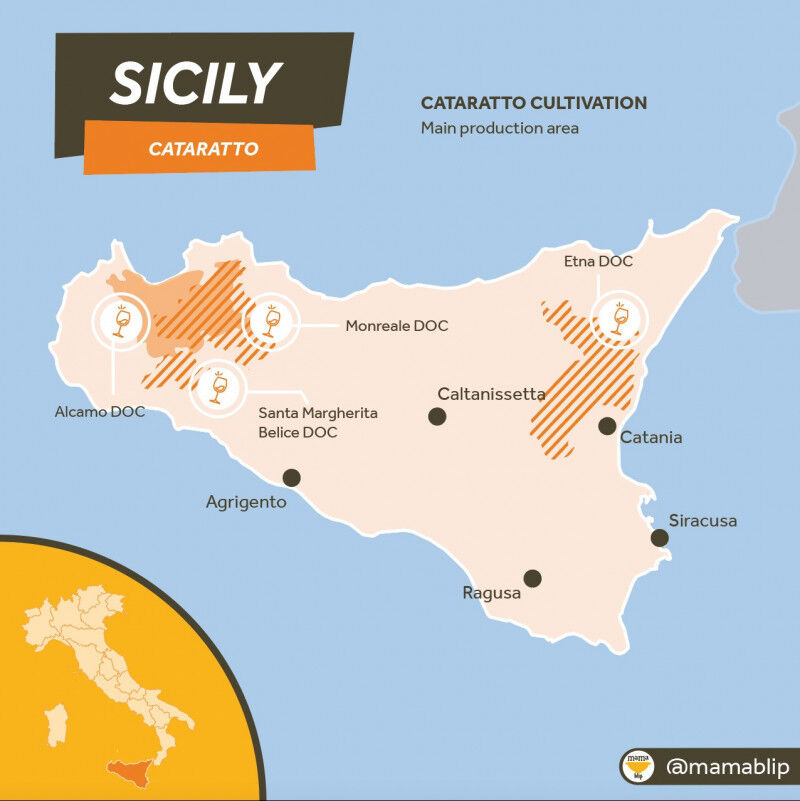
Catarratto’s legacy is woven through some of Sicily’s most storied wine districts, such as the celebrated Alcamo DOC and the volcanic Etna DOC. These regions not only highlight the grape’s unique adaptability but also reflect the deep connection between local communities and their cherished vines.
Alcamo DOC, established in 1972 in northwestern Sicily, covers a large and diverse area, producing both white and red wines. Here, white blends must include at least 60% Catarratto, while the prestigious Alcamo DOC Classico requires a minimum of 80%. These wines are renowned for their refreshing, fruit-driven style—a nod to the conviviality and warmth of Sicilian gatherings.
Etna DOC, created in 1968, draws on volcanic soils to impart distinctive minerality and complexity. White Etna DOC wines blend at least 60% Carricante with up to 40% Catarratto, resulting in vibrant, structured wines that can gracefully age. The interplay of altitude, ancient lava flows, and expert craftsmanship makes Etna DOC a beacon of quality and tradition in Sicilian viticulture.
The Ancestral Roots and Evolution of Catarratto
For centuries, Catarratto’s identity was shrouded in mystery, with experts believing it to be two distinct varieties: Catarratto Bianco Comune and Catarratto Bianco Lucido. It wasn’t until modern DNA analysis in 2008 that both were revealed to be variations of the same grape. Catarratto’s origins may even link back to Italy’s historic Garganega grape, famed in the Soave region. This fascinating lineage highlights the grape’s journey from ancient rural traditions to its present status as Sicily’s most cultivated white variety—a living bridge between generations and terroirs.
While both major clones of Catarratto produce abundant yields, Bianco Comune is more commonly found in wines destined for everyday enjoyment, while Bianco Lucido and the rare Extra Lucido are increasingly favored by artisan producers seeking expressive, terroir-driven wines.
Traditional and Modern Winemaking Techniques for Catarratto
Catarratto’s generous yields have long challenged winemakers to balance quantity with quality. Over time, Sicilian vintners have developed nuanced viticultural and cellar practices to reveal the grape’s finest attributes. Stainless steel fermentation is commonly used to preserve Catarratto’s fresh fruit character, while select bottlings benefit from subtle oak aging, which imparts extra dimension and richness. Some exceptional Catarratto wines, especially those from Etna’s slopes, are matured for several years, developing remarkable depth and complexity—a testament to Sicily’s enduring winemaking heritage and the talent of its artisans.
Wines Comparable to Catarratto: Exploring Alternatives
- Pinot Grigio, Veneto IGT, Italy
- Soave, Italy
- Arneis, Italy
- Muscadet, France
Curious Facts About Catarratto: A Sicilian Treasure
- Catarratto is a key ingredient in Sicily’s world-famous Marsala wine, adding its signature brightness to this celebrated fortified wine.
- It proudly holds the title of Sicily’s most-planted grape, shaping the island’s wine culture for generations.
- Known by a variety of names—including Castellaro, Catarratto Bertolaro, Catarratto Bianco Nostrale, Catarratto Bianco Latino, and Catarratto Bianco Nostrale—this grape’s many monikers reflect the rich tapestry of Sicilian dialects and traditions.
all.sign in to leave a review