Before San Guido – G. Carducci, 1874
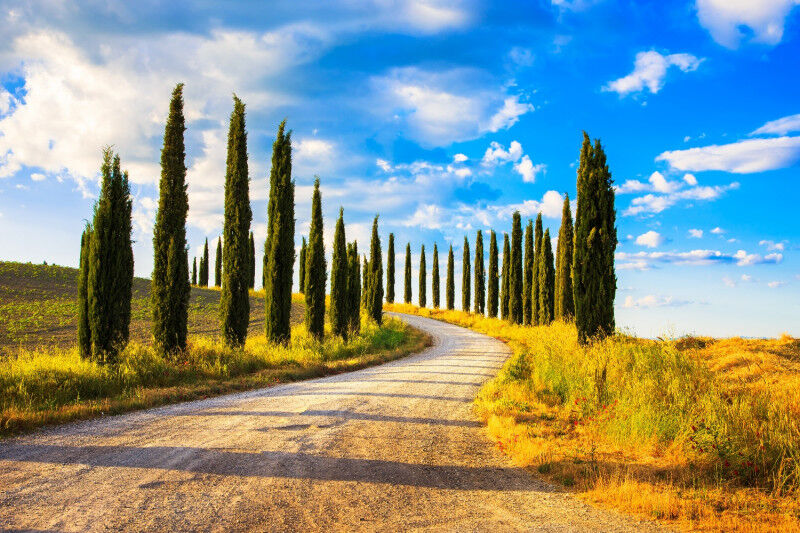
The tall, straight cypresses in double rows
March from San Guido down to Bolgheri;
Like young giants at a race they go,
Eager to greet and welcome me once more.
The celebrated Tuscan poet Giosuè Carducci immortalized the enchanting village of Bolgheri in his poetry, capturing the spirit and landscape in verses that echo through time. To arrive at this magical medieval hamlet, you journey along the iconic Viale dei Cipressi—a breathtaking, five-kilometer avenue flanked by towering cypress trees. This grand approach, connecting the historic Oratory of San Guido along the ancient Via Aurelia to the picturesque heart of Bolgheri, sets the stage for the unforgettable sensory experience that awaits any visitor.
The Storied Legacy of Bolgheri: Where Tradition Meets Innovation
Bolgheri is not just a village; it is a living monument to Italy's enduring passion for winemaking. The land’s history and the legendary cypress avenue are inextricably linked to the rise of its fabled red wines, whose unmatched character has made this stretch of the Tuscan coast a global sensation. Every bottle from Bolgheri tells the story of resilience, innovation, and love for the land.
The magnificent avenue, now the symbol of the Bolgheri Consortium, was a vision realized by Guidalberto della Gherardesca in the early 1800s. A true pioneer, della Gherardesca revitalized the region’s vineyards, applying the most advanced agricultural methods of his day. His efforts laid the groundwork for today’s world-renowned wineries, shaping Bolgheri’s destiny as a beacon of viticultural excellence.
Bolgheri Viticulture: Nature’s Perfect Stage for Wine
Viticulture has flourished in Bolgheri since the 12th century, finding its natural home in a region blessed with unique geography and climate. The contemporary territory, part of the esteemed Castagneto Carducci municipality in the province of Livorno, forms a natural amphitheater that embraces the vines and shapes their character.
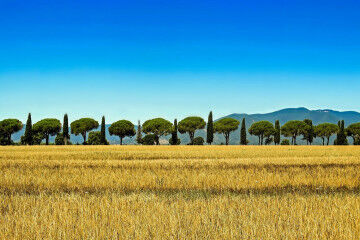
This enchanting stretch of the Tuscan coastline looks out over the shimmering Mediterranean, with views stretching to the islands of Capraia, Gorgona, and even Corsica. The surrounding Colline Metallifere—the Metal-Bearing Hills—form a protective corridor, sheltering vineyards and providing a dramatic backdrop to the rolling landscape.
Vineyards here rise from just 10 to 380 meters above sea level, spreading from fertile plains to the wooded slopes that lend the region its character. These verdant woods are not just picturesque; they create a natural microclimate, keeping the summer heat in check and nurturing a vibrant, diverse ecosystem that enhances the quality of every grape.
Constant sea breezes sweep through Bolgheri, refreshing the vines, reducing humidity, and protecting against disease. This airflow infuses the grapes—and thus the wines—with a distinctive freshness and elegance, a hallmark of Bolgheri’s reds. The area’s abundant sunshine and a steady annual rainfall of about 600 mm provide ideal conditions for grape ripening.
Bolgheri is famed for its international grape varieties: Cabernet Sauvignon (36%), Merlot, Cabernet Franc (23%), and Petit Verdot (12%)—each thriving in this magical terroir. Expert growers use the spurred cordon and Guyot training methods to coax the best from each vine, ensuring the wines are rich, complex, and utterly memorable. Here, a glass of Bolgheri Rosso or the celebrated Super Tuscans pairs beautifully with local dishes like Cacciucco Livornese or Wild Boar Ragù—an unmissable taste of Tuscany’s bounty.
The Complex Terroir of Bolgheri: An Alchemy of Land and Sea
The Bolgheri Consortium, founded in 1995 by 60 visionary producers, now oversees more than 1,370 hectares of vineyards, yielding about 7 million bottles each year. This boom is no accident—the land beneath Bolgheri is a patchwork of geological wonders.
The subsoil’s rich diversity is a defining feature: part marine origin, with layers formed by ancient sea beds, and part alluvial, shaped by rivers that brought minerals from the surrounding hills. This mosaic of soil types, meticulously mapped by renowned expert Professor Attilio Scienza, reveals at least 27 distinct soil profiles—often within a single vineyard. Deep soils act as vital water reserves, sustaining vines through even the driest summers.
Soils are primarily composed of sand and clay, with scattered fossil shells whispering of ancient oceans. In the legendary vineyards of Sassicaia, deposits of iron oxide add yet another layer of complexity, infusing the wines with a remarkable depth and structure that sets them apart from any other red in Tuscany.
Sassicaia: The Icon That Changed the World of Wine
At the heart of Bolgheri’s fame is Sassicaia—a wine that forever changed the world’s perception of Italian reds. With its debut, Sassicaia put Bolgheri on every wine lover’s map and earned its own prestigious DOC status as Bolgheri Sassicaia in 2013—a rare distinction in Italian wine law.
Yet, the road to greatness was not without obstacles. As recently as 1983, Italian wine regulations limited the “Super Tuscan” designation to whites and rosés, relegating Bolgheri’s magnificent reds to the humble label of "table wine." The international wine community was astounded that such extraordinary bottles were denied proper recognition. It was, in fact, thanks to global demand that the movement to protect and celebrate Sassicaia and its peers gained momentum, leading to the DOC protections we know today.
The first official vintage of Sassicaia, produced in 1972 from the 1968 harvest, was the genius creation of Mario Incisa della Rocchetta, in partnership with his wife Clarice della Gherardesca. Guided by the visionary enologist Giacomo Tachis, already famous for his work with Marchesi Antinori, they crafted a wine that astonished critics. The legendary taster Gino Veronelli tasted Sassicaia in 1974 and sang its praises—as did countless others in the years to follow.
Sassicaia’s international acclaim soared in 1978 during a famous Decanter blind tasting, where it triumphed over the world’s top Bordeaux blends. Its 1985 vintage achieved mythic status when awarded a perfect 100 points by Robert Parker. Today, Sassicaia stands as an icon—a cult wine sought after by collectors and connoisseurs from America to Asia, an emblem of Italian excellence and innovation.
For a deeper dive into the enchanting world of Bolgheri, watch Filippo Bartolotta’s masterful video guide to the Bolgheri wine lands and learn how its unique terroirs and traditions shape the wines we love. Planning a journey to Tuscany? Be sure to explore the coastal vineyards, taste the latest vintages, and discover how the Bolgheri and Bolgheri Sassicaia Wine Consortium is bringing these exceptional wines to a global audience.
Stay connected with Mamablip—sign up for our newsletter for the freshest stories, blog articles, authentic recipes, and the latest news from the world of Italian wine and gastronomy.